Moving from Vancouver to Calgary: Which Neighbourhood Matches Your Current Life?
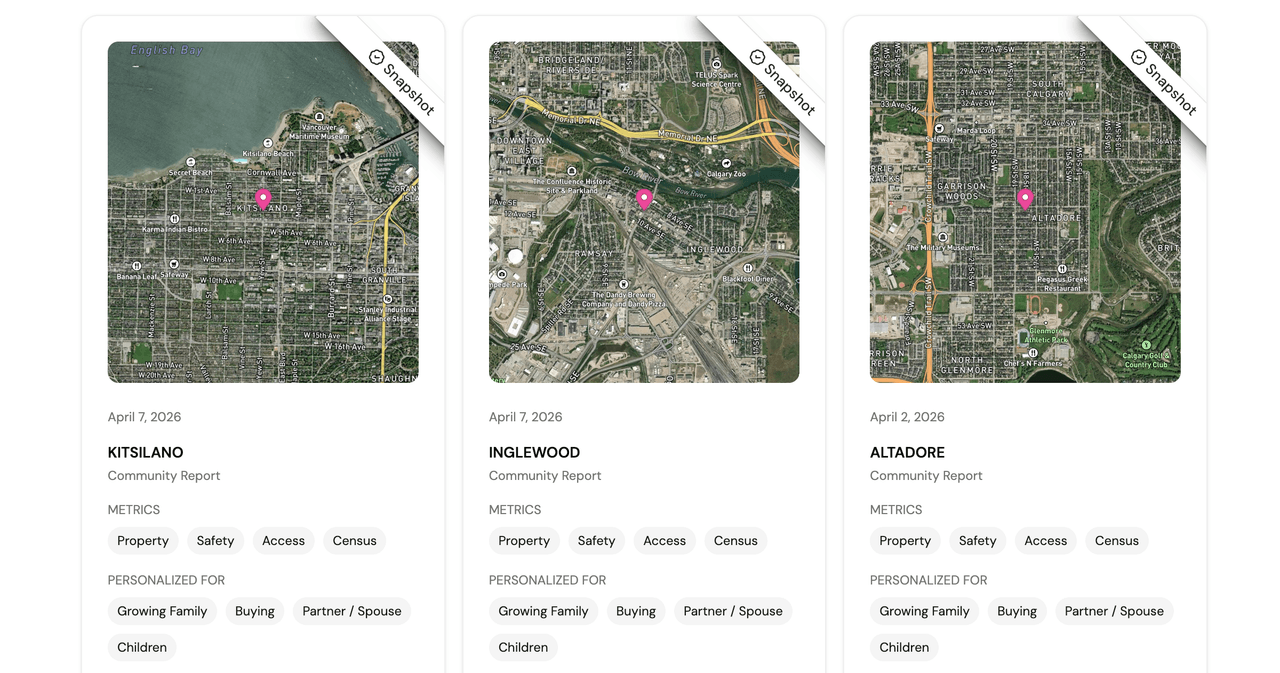
You have done the math on Vancouver housing and it stopped adding up. A west-side neighbourhood like Kitsilano carries a median assessed value of $1,211,450 across all property types, while a walkable inner-city Calgary community like Kensington sits under $500,000. That kind of gap is why BC-to-Alberta migration hit record numbers in 2024 and 2025, with Alberta gaining thousands of net interprovincial migrants per quarter according to Statistics Canada.
But moving from Vancouver to Calgary is not just a financial decision. It is a lifestyle transplant. The neighbourhood you love in Vancouver, its walkability, its coffee shops, its transit, does not disappear just because you cross the Rockies. It maps onto somewhere in Calgary. The question is where.
Here is how four data lenses (property values, safety, accessibility, and census demographics) can match your Vancouver neighbourhood to its closest Calgary equivalent.
The 4-Lens Framework: How Neighbourhood Matching Works
PickYourPlace scores every neighbourhood across four dimensions: Value (assessed property values and trends), Safety (crime incidents, emergency services, street lighting), Accessibility (walking distance to grocery stores, schools, parks, transit), and Census (population density, household income, age distribution, housing tenure).
When you compare neighbourhoods across cities using these four lenses, patterns emerge. Each lens is scored as a percentile within its own city, so a neighbourhood near the top for walkability in Vancouver lines up with the one near the top in Calgary, even if the streets look different. One caveat worth holding onto: Vancouver is walkable almost everywhere, so a mid-percentile score there still means excellent everyday access in absolute terms.
You can run this comparison yourself on the Explore map for both cities, or generate a full report for any address to see exactly how it scores.
If You Love Kitsilano: Look at Kensington
Kitsilano is Vancouver's benchmark for walkable, lifestyle-oriented living, with about 30 grocery and food options inside a 15-minute walk. On PickYourPlace's Accessibility lens it sits around the 53rd percentile within Vancouver: strong in absolute terms, though transit lags (35th percentile) until the Broadway SkyTrain extension reaches its southern edge at Arbutus. The population has a median age of 40, and renters hold a slight majority at 57%.
Calgary's Kensington lines up closer than you would expect. Spanning the Hillhurst and Sunnyside communities just northwest of downtown along the Bow River, it delivers Calgary's top-tier walkability: Hillhurst sits in the 88th percentile for accessibility and Sunnyside the 91st, with Sunnyside station putting downtown a few minutes away by CTrain. The Kensington Road strip mirrors the 4th Avenue corridor in Kits: independent restaurants, specialty coffee, local retail. In a car-oriented city, you want the top of the range to preserve a car-light life, and Kensington is it.
The difference is cost. Hillhurst's median assessed value is $499,500 and Sunnyside's is $375,500 across all property types, against $1,211,450 in Kitsilano. That gap, well over $700K, changes what is financially reachable.
Demographics rhyme too. Both communities run a median age of 36 to 40 and a renter-leaning tenure mix (Sunnyside 67% renters, Kitsilano 57%). If your Kits lifestyle revolves around walking to brunch and biking along the water, Kensington is the closest data match in Calgary.
For a deeper look at Kitsilano's data profile, see our Kitsilano neighbourhood guide.
If You're from East Van or Commercial Drive: Look at Inglewood
Commercial Drive in East Vancouver, the heart of the Grandview-Woodland community, has a reputation built on independent shops, cultural diversity, and a density that feels alive without feeling downtown. It sits around the 54th percentile for accessibility within Vancouver, with about 30 grocery and food options in a 15-minute walk, and a renter share of roughly two-thirds. Its property crime runs high for the city (around the 81st percentile for crime volume), concentrated on the commercial strip.
Calgary's Inglewood, the city's oldest neighbourhood, is the closest parallel. Situated along the Bow River southeast of downtown, its 9th Avenue SE corridor functions like a smaller Commercial Drive: vintage shops, craft breweries, independent restaurants, and a weekend farmers' market. Its accessibility percentile is lower (32nd, with about four grocery and food options in a 15-minute walk), so it reads as a quieter, lower-rise version of the Drive, and like Grandview-Woodland it carries above-median property crime (74th percentile for volume, though all-crime fell 19% year over year in 2025).
Property values tell the story of the move. Inglewood's median assessed value is $388,500 across all property types, against $1,330,500 in Grandview-Woodland.
The census data shows a recognizable community profile: a median age near 39, a mix of owners and renters (roughly 56 to 44), and household sizes that skew toward singles and couples. If Commercial Drive is your baseline, Inglewood delivers a similar rhythm at a fraction of the cost.
If You're from Mount Pleasant: The Case for Bridgeland
Mount Pleasant sits between Main Street and Cambie in Vancouver, and it is one of the city's strongest walk-and-transit neighbourhoods: the 79th percentile for accessibility and the 78th for transit within Vancouver, among the highest of any community we score there. It blends young families with creative professionals, with a median age of 36 and renters at about 60% of households.
Bridgeland, northeast of Calgary's downtown core, is the data match. At the 67th percentile for accessibility within Calgary, it offers strong pedestrian access to cafes along 1st Avenue NE and the Edmonton Trail commercial strip, with the Bridgeland/Memorial CTrain station a few minutes from downtown. Calgary is a more spread-out city than Vancouver, but relative to Calgary, Bridgeland ranks among the denser inner-city communities.
Median assessed values run $365,500 across all property types in Bridgeland, against $788,550 in Mount Pleasant. Bridgeland's demographics show a median age of about 43, with a growing share of young professionals alongside established residents, a pattern that mirrors Mount Pleasant's trajectory from a decade ago.
If You Live in the West End: Look at the Beltline
Vancouver's West End is the densest, most walkable, most rental neighbourhood in this comparison. It reaches roughly 51 grocery and food options within a 15-minute walk, the most of any community we score in Vancouver, sits at the 72nd percentile for accessibility, and runs about 81% renters in small households averaging 1.6 people. Its median age is 40.
The Beltline, Calgary's high-density district covering Connaught and Victoria Park just south of downtown, is the closest counterpart, and the data alignment is unusually tight. It is the most walkable neighbourhood in Calgary (90th percentile for accessibility, 98th for transit, about 33 grocery and food options in a 15-minute walk), anchored by the 17th Avenue SW restaurant-and-bar corridor. Like the West End, it is overwhelmingly rental (about 74% renters) in 1.6-person households, though it skews younger at a median age of 34.
The difference is cost. The Beltline's median assessed value is $234,000 across all property types, the lowest of any neighbourhood here, against $834,000 in the West End. Both carry the higher crime volumes that come with dense, downtown-adjacent living, each sitting in the upper range for its own city, so this is a like-for-like trade on that front rather than a clean upgrade. If West End living is your baseline, the Beltline is the closest Calgary offers, at roughly a quarter of the assessed value.
If You're from Point Grey or Dunbar: Britannia and Elbow Park
This is the hardest match. West Point Grey and Dunbar-Southlands represent Vancouver's established west-side character: large lots, mature trees, strong ownership, and quiet, amenity-light streets. Each reaches only 3 to 7 grocery and food options in a 15-minute walk, and both rank near the bottom of Vancouver for accessibility and transit. Median ages run to 44, households are larger (2.4 to 2.8 people), and owners hold the majority (60% in West Point Grey, 72% in Dunbar-Southlands).
Calgary's closest equivalents sit along the Elbow River south of downtown: Britannia and Elbow Park. Both are owner-dominant (77% in Britannia, 92% in Elbow Park), with larger households and older residents (median ages of 50 and 43), and both rank at the very top of Calgary's Value lens (86th and 82nd percentile), the city's established-money addresses. They are car-oriented and amenity-light on foot, much like their Vancouver counterparts.
These are the only pairings where Calgary stays genuinely expensive. West Point Grey and Dunbar-Southlands carry median assessed values around $3.0M to $3.1M; Britannia comes in near $2,400,000 and Elbow Park near $1,820,000. The saving is real but smaller in relative terms, and the trade is specific: you give up ocean and UBC proximity for the Elbow River pathway and the Glenmore Reservoir. If you are in this segment, the match is partial, so we would run a full Analyze report on a specific Calgary address before deciding.
What the Data Doesn't Show
These comparisons use quantifiable metrics: property values, crime counts, distance to amenities, demographic breakdowns. They do not capture everything. Calgary's winters are colder and drier than Vancouver's (an average January temperature around -7 °C, against roughly 3 °C in Vancouver, per Environment Canada). Calgary does not have an ocean. Vancouver does not have the Rockies 90 minutes away.
Transit coverage differs structurally: Vancouver's SkyTrain network is more extensive than Calgary's CTrain, and the bus networks serve different urban forms. If you rely on transit daily, verify the specific routes from your target Calgary neighbourhood to your workplace. A neighbourhood report includes transit and accessibility scoring that helps with this.
The data also cannot predict how a neighbourhood will feel when you walk through it. Before committing, fly out and spend a weekend in your shortlisted areas. Walk the blocks at different times of day.
Using PickYourPlace to Validate Your Calgary Shortlist
If you are planning a move from Vancouver to Calgary, here is how to pressure-test your shortlist with actual data:
- Start with Explore: Toggle between the Value, Safety, Accessibility, and Census lenses to compare your Vancouver neighbourhood against Calgary candidates side by side
- Run a report with Analyze: Enter a specific Calgary address to get a percentile-ranked breakdown across all four lenses, with AI-generated analysis of trade-offs
- Share with your agent: Every report has a shareable link, so you can send it to your Calgary realtor before your first showing
The numbers will not make the decision for you. But they will tell you which Calgary neighbourhoods actually match the life you are living now, and which ones just look similar on a map.
Already researching the Ontario-to-Alberta corridor? Our complete guide to moving from Ontario to Calgary covers the financial and lifestyle comparison in detail.
Coming from Toronto specifically? Our Toronto-to-Calgary neighbourhood match maps Leslieville, The Annex, and Etobicoke to their closest Calgary equivalents.
Keep reading
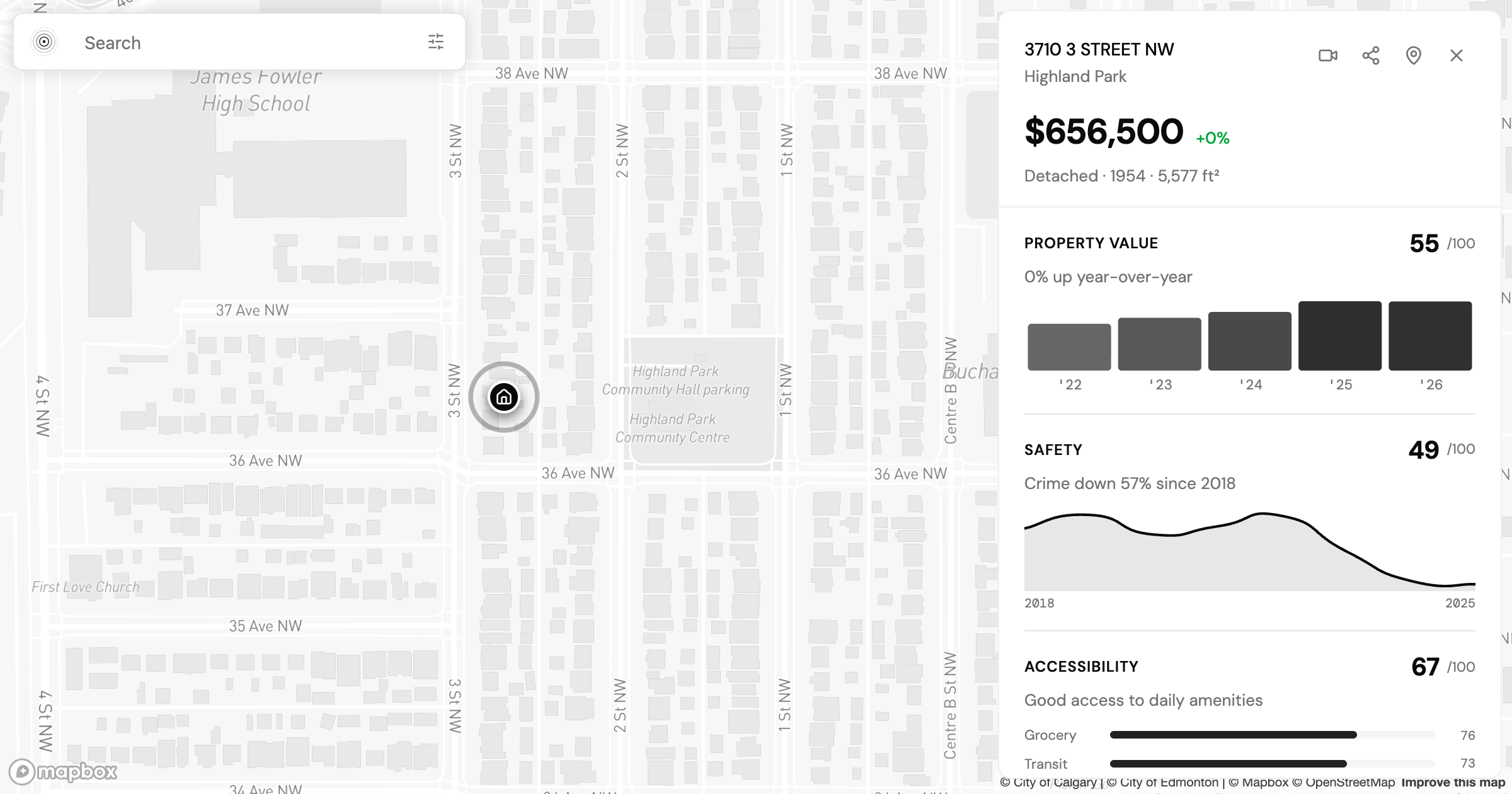
Is Highland Park Calgary Safe? Reading the Inner-North Crime Data
Is Highland Park Calgary safe? We pulled the Calgary Police crime data for this inner-north community and read a safety score of 49 category by category.
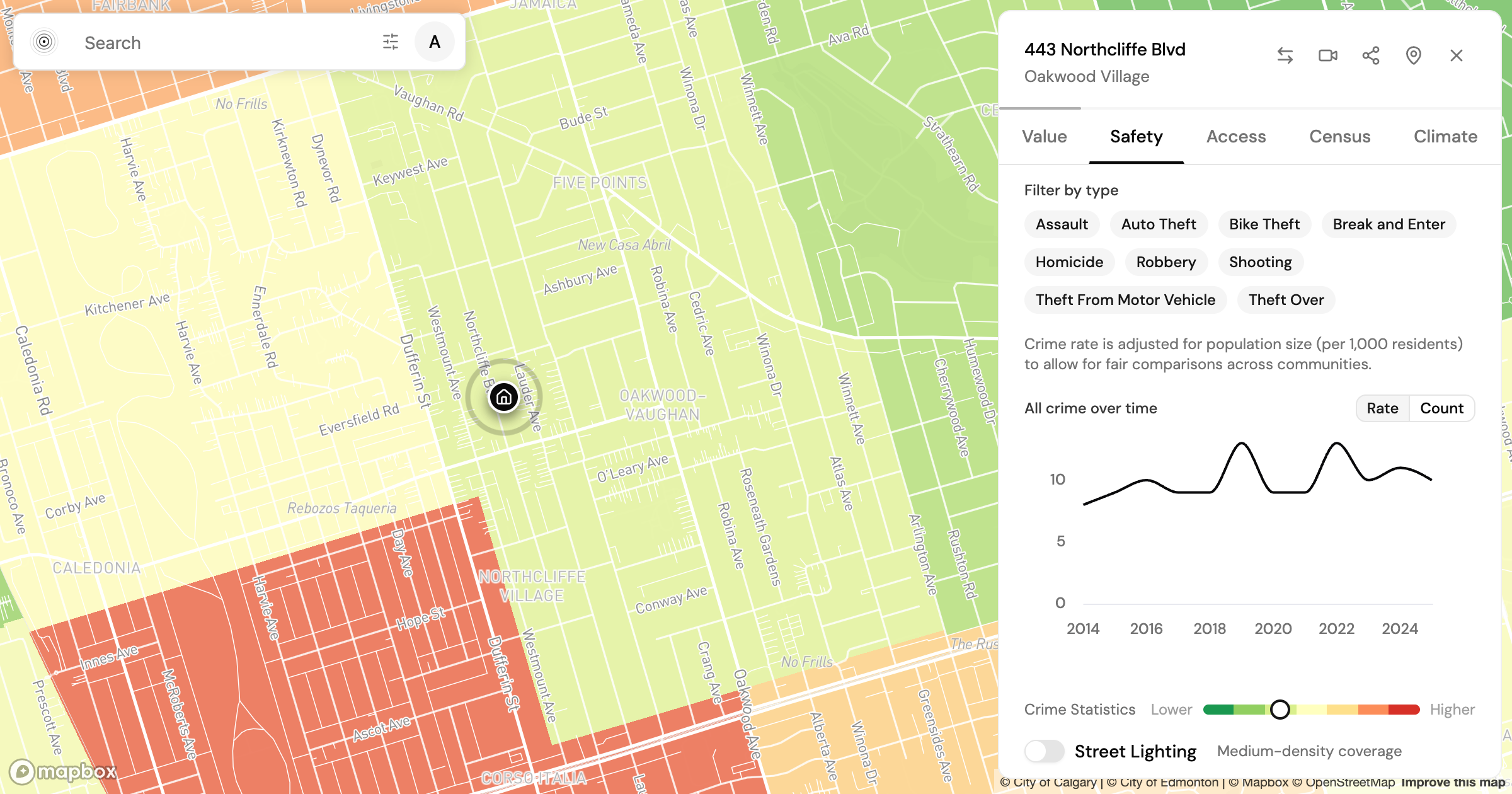
Is Oakwood Village Toronto Safe? What the Crime Data Shows
Is Oakwood Village Toronto safe? We read the Toronto Police crime data by category and trend to show how to turn a safety score into a question you can act on.
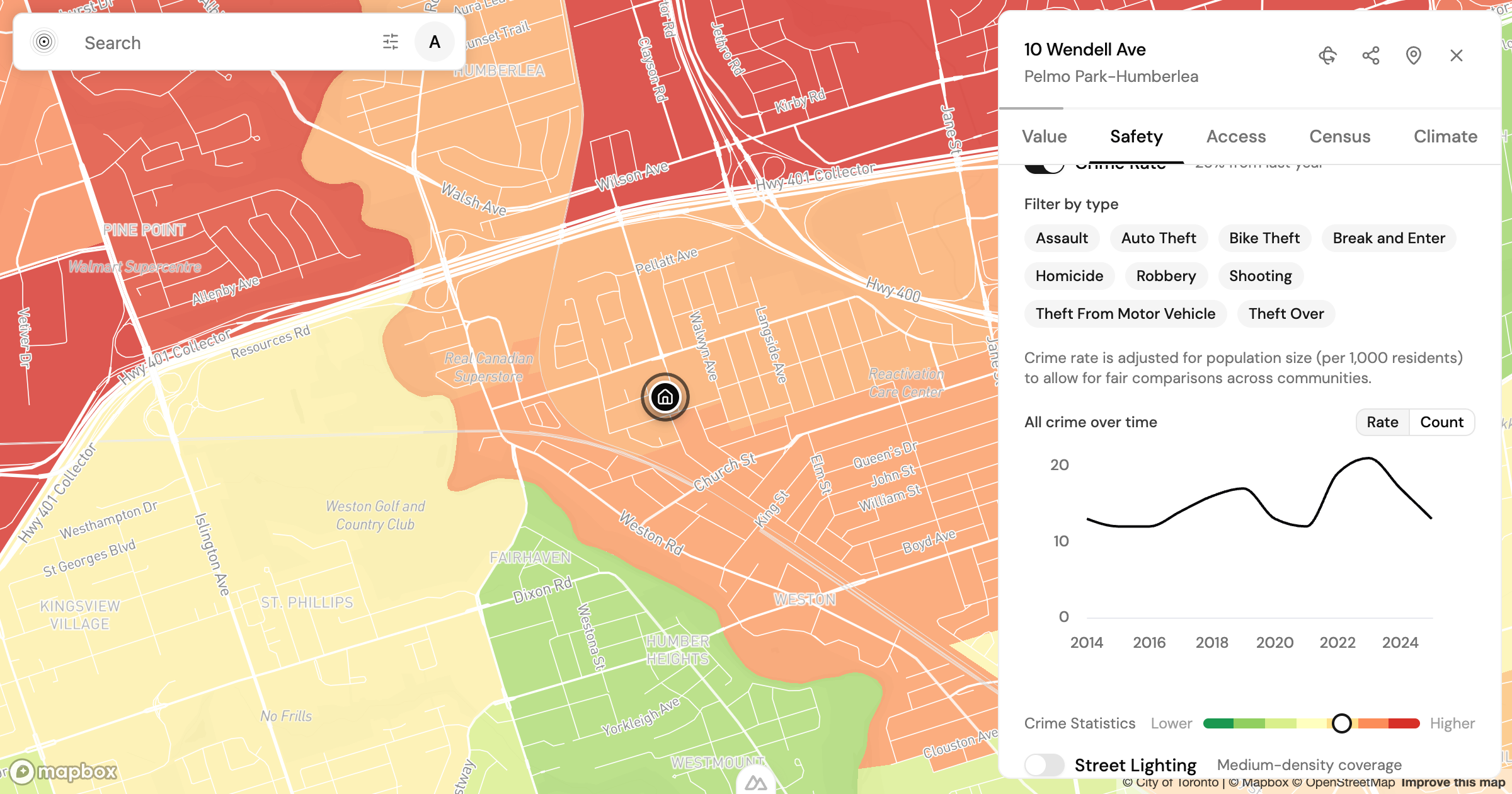
Is Pelmo Park-Humberlea Safe? How to Read Northwest Toronto's Crime Data Before You Buy
Is Pelmo Park-Humberlea safe? We read Toronto's 2025 crime data by category and trend to show how to weigh a northwest Toronto safety score before you buy.
Start my move
Tell us about the move and we will narrow the city down to places that fit, with the reasons and the trade-offs. No account needed.
Start my move