Edmonton assessed values by neighbourhood: inner-south, compared
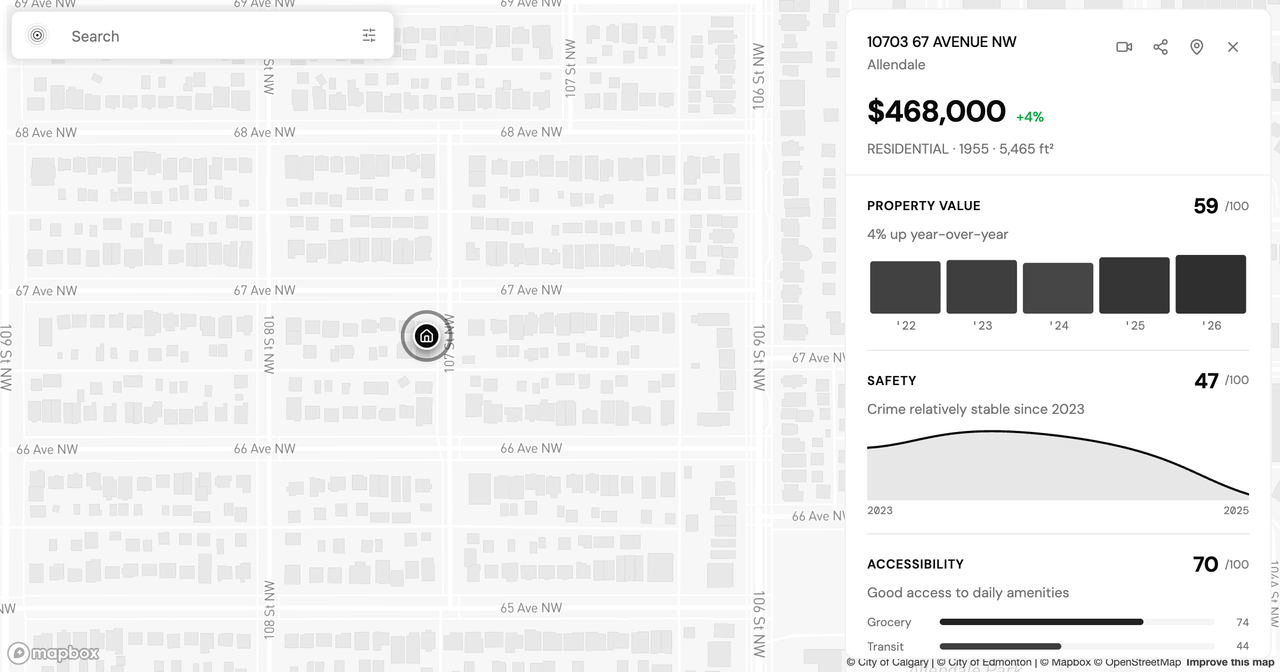
You are relocating to Edmonton, maybe from Ontario, and you have two candidate homes in the inner-south, one in Allendale and one in Bonnie Doon, a few kilometres apart and both within easy reach of Whyte Avenue. On the listing sites they look interchangeable. But Edmonton's assessed values by neighbourhood, read alongside accessibility and census data, tell you the two addresses are not the same decision. Allendale's 2026 assessment roll median sits at $468,000; Bonnie Doon's at $473,000. Almost identical. Everything underneath that number is where they part ways.
Why inner-south Edmonton is hard to compare
Two homes on the same street can read very differently once you look past the asking price. Assessed value tells you what the city puts a property at for tax purposes; it does not tell you how that value has moved, who your neighbours are, or how far you can actually get in 15 minutes on foot. In the inner-south (Allendale, Bonnie Doon, Strathcona, and the pockets around them), those three things swing hard from one community to the next. A new arrival has no reference point for any of it, and every comparable site shows active listings without the multi-year assessment trend or the census context that a report supplies. That is the gap this is meant to close.
What Allendale's assessed values show
Allendale's 2026 assessment roll puts the median at $468,000, up 11.5% over five years and 4.0% year over year, so the trend is steady rather than sharp. On the Accessibility lens it scores 70 out of 100, with five grocery stores reachable in a 15-minute walk. The census picture is a median age of 34, an average household size of 2.2, and a near-even 44.6% owner to 55.4% renter split. On the Safety lens, Allendale's reported-incident volume for 2025 lands around the 78th percentile citywide, and all-crime was down 9.7% year over year. Percentiles for volume partly track population and reporting rates, and the figure counts reported incidents only, not severity, and not what goes unreported.
Bonnie Doon: the same value, a different profile
Bonnie Doon's assessed median is $473,000, with 11.3% five-year growth and the same 4.0% year-over-year move, effectively a twin of Allendale on value. Accessibility is close too, a score of 67, with four groceries within a 15-minute walk. The census skews a little older: a median age of 41, a household size of 2.1, and a 50.8% owner to 48.8% renter split. Where the two separate is the Safety lens. Bonnie Doon's 2025 reported-incident volume sits near the 88th percentile citywide and rose 37.5% year over year, most of that increase in property crime (up 59.2%). Read that carefully. It is a one-year change in reported volume, weighted toward property offences; the lens measures what was reported, not the risk to any single address, and a single year can swing on a handful of incidents. If a safety trend is near the top of your list, this is the signal worth opening in full and watching over more than one year. If it is not, two homes that look identical on price still carry different questions.
Strathcona: a different housing market entirely
Keep walking and the numbers stop rhyming. Strathcona's 2026 assessed median is $224,000, less than half of Allendale's, with essentially flat five-year growth of 0.7% and 2.0% year over year. That gap is not a discount on the same kind of home; it reflects a different housing stock. The tenure split tells the story: 28.5% owner to 71.4% renter, far more renter-heavy than Allendale's near-even split. Accessibility runs high, with 11 grocery stores reachable in a 15-minute walk. If you are looking at a condo or a rental-heavy, walkable pocket, Strathcona is a different market than the higher-median streets of Allendale to the south and Bonnie Doon to the east, and comparing its median against theirs dollar for dollar tells you almost nothing.
Read the lenses together, not separately
The mistake is to look at one number at a time. An Analyze report for a community or a specific address in Edmonton puts the value trend, the accessibility isochrone, and the census tenure mix on the same page, so you can see how they interact. Allendale and Bonnie Doon are close to identical on assessed value and walkability and diverge on the safety trend and household age. Strathcona breaks from both on price and tenure. None of that is visible from an asking price, and it is worth knowing how the lenses are scored before you weigh them. The point is not which community wins; the data does not answer that. It is which trade-offs you are actually signing up for.
What to do before you make an offer
Start on the Explore map to see the lenses laid over the inner-south, the same view we opened up when PickYourPlace launched in Edmonton. Then run a community report on your shortlist and open Compare to set two candidates side by side. If you prioritize a steady value trend and a near-even owner-to-renter mix, the data points one way; if walkability and a lower entry price matter more, it points another. The report will not make the call for you, and it is not a substitute for your agent or an inspection. It gives you the numbers to walk in with.
Keep reading
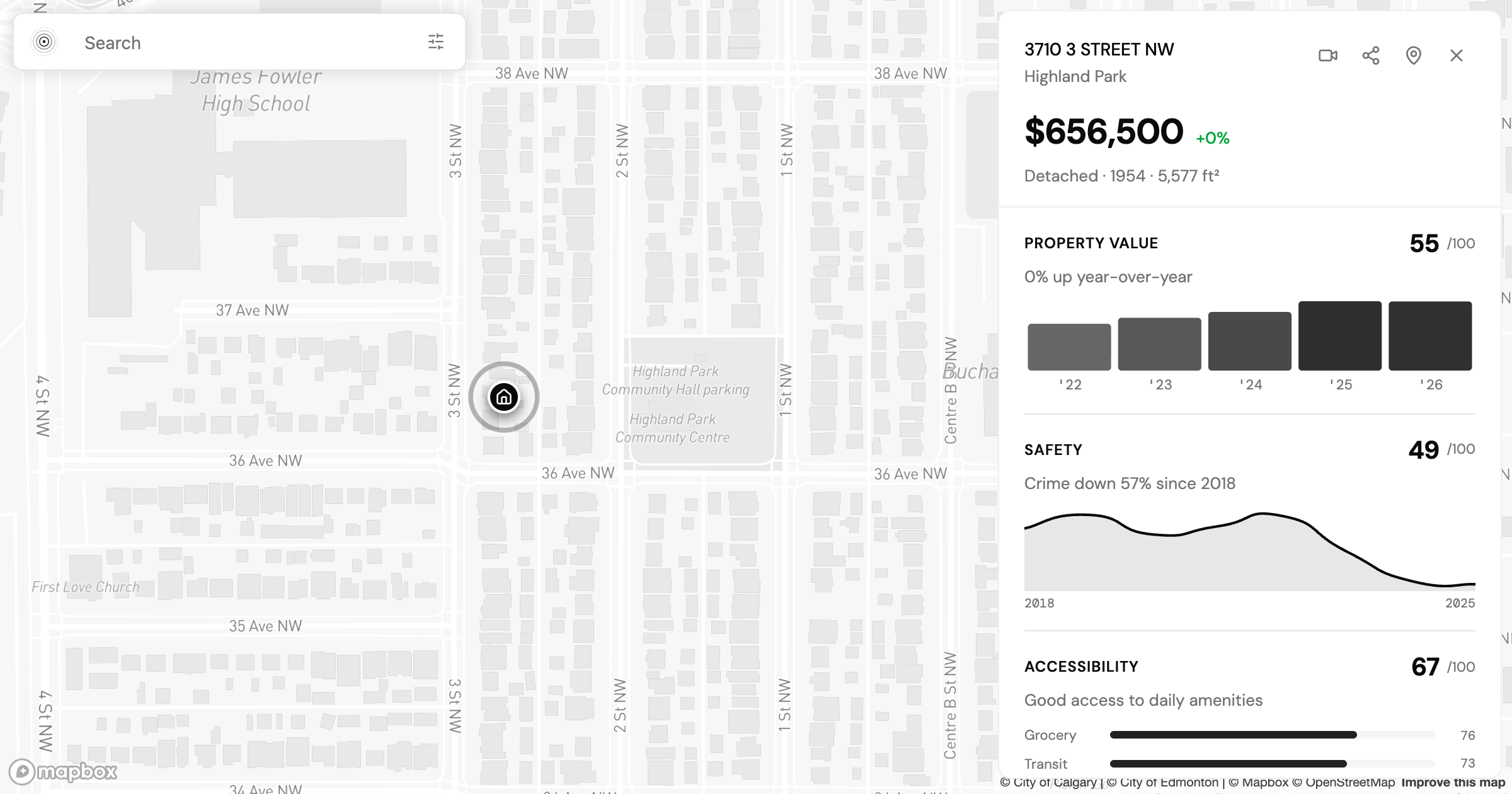
Is Highland Park Calgary Safe? Reading the Inner-North Crime Data
Is Highland Park Calgary safe? We pulled the Calgary Police crime data for this inner-north community and read a safety score of 49 category by category.
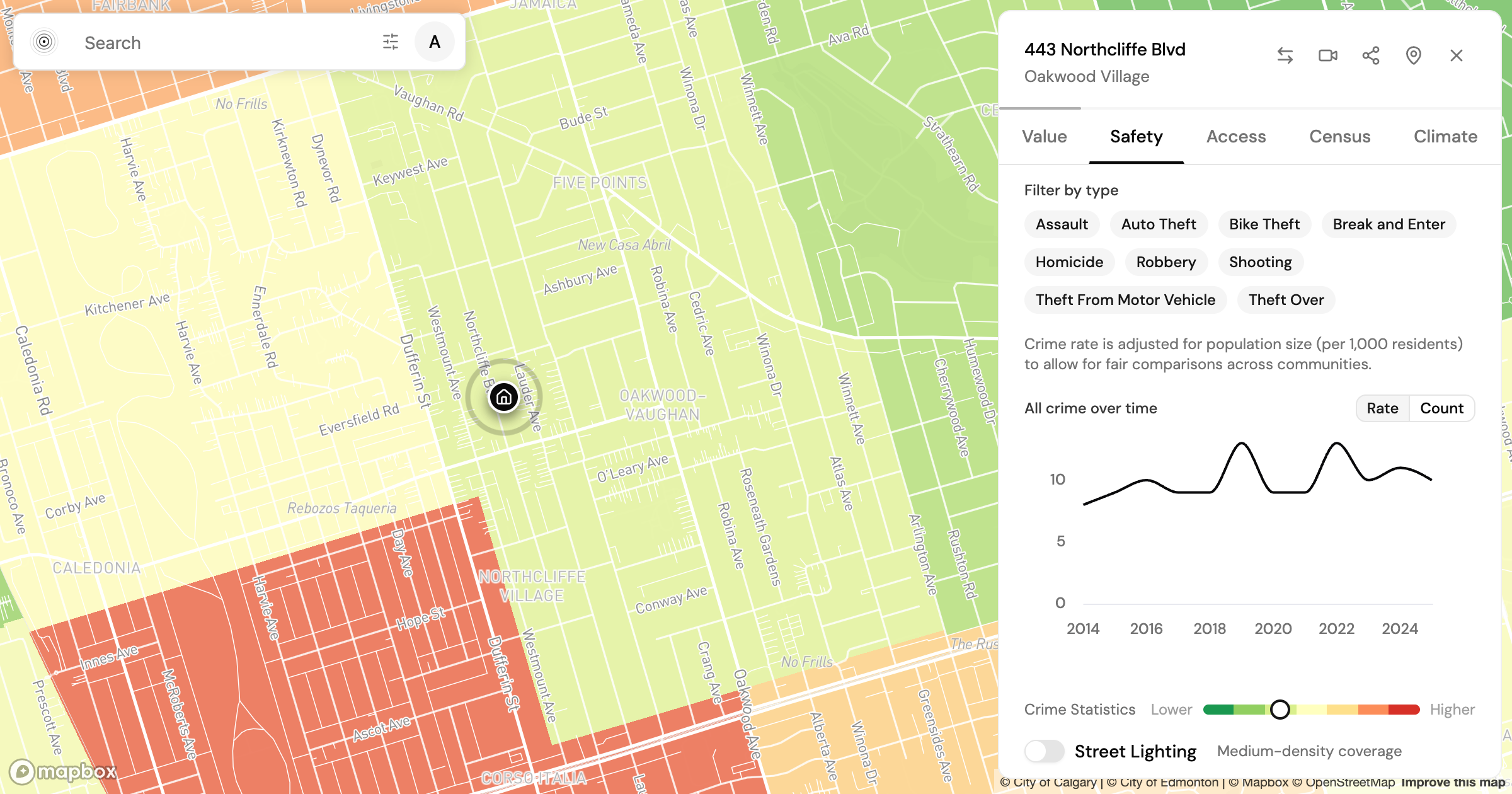
Is Oakwood Village Toronto Safe? What the Crime Data Shows
Is Oakwood Village Toronto safe? We read the Toronto Police crime data by category and trend to show how to turn a safety score into a question you can act on.
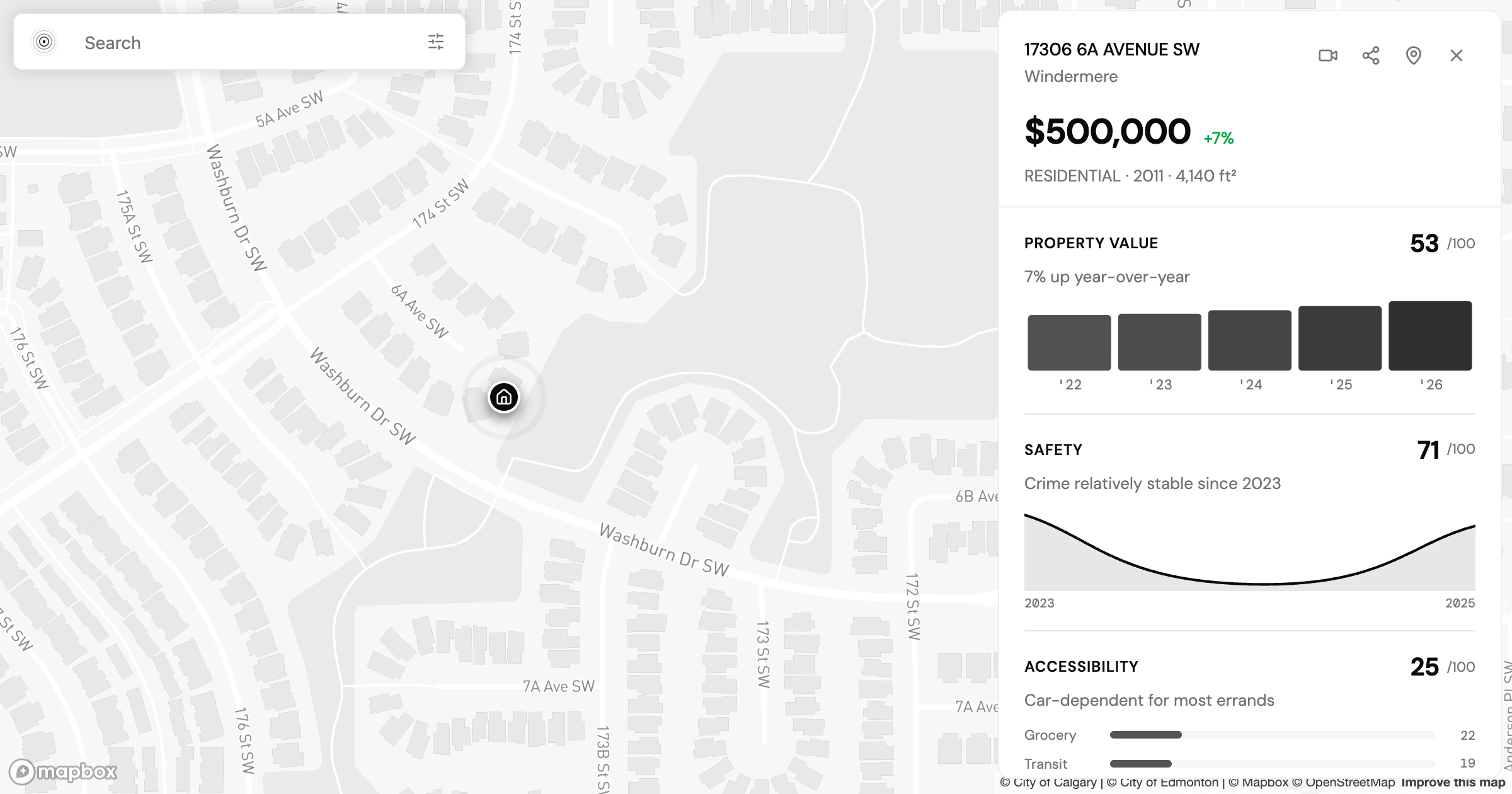
Allendale vs Windermere: Two Edmonton Neighbourhoods, Side by Side
Allendale vs Windermere in Edmonton: two communities at nearly the same assessed value that split on transit, safety, and who lives there. What the data shows.
See where the data comes from
Every source, and the four rungs between a public record and a sentence about your life, each with what it cannot tell you.
See where the data comes from