I Can Track a $15 Pizza, But Not a $500K Home's Flood Risk?
A post in r/FirstTimeHomeBuyer made the rounds recently, and one line in it has stuck with me ever since.
A first-time buyer, six months and 30 showings into their search, was at the end of their rope. Every time, the same pattern: fall for the listing photos, clear a Saturday, drive across town, walk through the front door already picturing the furniture, and only then get handed the disclosure documents. That is when the deal-breakers showed up. The creek out back that floods every spring. The foundation that has settled. The insurance quote that quietly doubles the monthly cost.
Their frustration came down to one line:
"I can track a $15 pizza in real time, but for a $500,000 purchase I have to beg for a PDF to find out the house is in a flood zone?"
They are not wrong. And here in Calgary, that example is not hypothetical.
In June 2013, the Bow and Elbow rivers overran their banks and forced tens of thousands of Calgarians out of their homes. Riverside communities like Bowness, Sunnyside, Mission, Inglewood, and Elbow Park were among the hardest hit. It remains one of the costliest natural disasters in Canadian history. More than a decade later, flood risk is mapped in detail for the entire city. And yet the average buyer still finds out whether a specific house sits in a flood zone the same way that Reddit poster did: late, on paper, after they have already fallen for the place.
The cycle that wastes your weekends
If you have been house hunting, you know the sequence by heart. You find a listing that looks perfect. Renovated kitchen, great light, walkable street. You clear your Saturday, drive 40 minutes, and walk in already half-committed.
Then you say you are interested, and only then do the documents arrive. Somewhere in there are the things that should have been obvious from the start: the basement that took on water, the furnace that is 25 years old, the road widening planned for next year.
You lost a weekend. Again. Multiply that by 30 showings and you understand the thread.
Selling the sizzle, not the steak
There is an old sales line: sell the sizzle, not the steak. The first half of the buying process is built to get you emotionally invested. The listing sells you the chef's kitchen and the patio. By the time you notice the aging furnace, you have already mentally moved in.
Here is the thing, though: this is not a plot. It is the shape of the system. The information that would let you screen a home before you tour does exist, but it is scattered across municipal open-data portals, provincial assessment sites, police crime dashboards, and flood-mapping tools that were never designed to talk to each other. A good agent wants you in the right home and off the Saturday treadmill, but even they cannot easily assemble all of that for every listing you are curious about. The data is public. It is just not in one place, and it is not in plain language.
"But can't you just research this yourself?"
The most common reply to that Reddit post was some version of: you can just look this up yourself. And technically, that is true.
In Alberta you can pull a property's assessment history from the City of Calgary. You can check flood mapping through the Alberta Flood Awareness Map. You can read community crime statistics straight from the Calgary Police Service. You can scrub through years of Google Street View to spot past flooding, fresh construction, or a roof that has seen better days. In British Columbia, BC Assessment and municipal GIS portals do much the same.
One commenter described going further: writing custom scripts to pull records from a dozen public sources, then screening new listings each night, barely glancing at the photos. Another made house hunting a year-long hobby, driving past properties at different times of day before ever booking a tour.
Read that again. People are writing code to gather information that should be obvious from the start.
That is the real problem. Yes, the data exists. Yes, a determined buyer can find it. But the bar for being an "informed buyer" has quietly become unreasonable. You should not need to be a GIS analyst or a weekend programmer to learn whether a basement floods. "Do your due diligence" is good advice that assumes you already know what to research, where it lives, and how to read it, before you have ever bought a home. First-time buyers do not know what they do not know.
What you can actually do about it
The good news is that the data is out there. Here is how to reach it before you lose another weekend.
Check flood mapping first
Calgary maps flood risk in real detail. The city's data sorts flood-prone land into probability bands: a 1-in-5-year flood (a 20% chance in any given year), a 1-in-10-year flood (10%), and a 1-in-100-year flood (1%). It also separates areas that flood directly when a river overtops its banks from low-lying spots that stay dry behind a permanent barrier. The Alberta Flood Awareness Map covers the rest of the province. Checking takes a minute and can save you a day.
Pull the assessment history
The City of Calgary's assessment search shows a property's assessed value, often several years back. A sudden drop can hint at damage, a foundation issue, or another problem the listing will not mention. In Vancouver, BC Assessment does the same job.
Use Google Street View's time machine
Most people do not realize you can scroll back through years of Street View imagery. Look for past flooding, construction, roof wear, or the "creek" that used to be a river.
Read the crime trend, not the headline
The Calgary Police Service publishes community-level crime statistics. The number that matters most is not this year's count, it is the direction of travel. A community where incidents are falling tells a very different story from one where they are climbing, even at the same headline rate.
Ask early, and budget for an inspection
Ask your agent what is available up front: a Real Property Report in Alberta, a Property Disclosure Statement in British Columbia, and any past inspection reports. A good agent will track these down for you, because a buyer who walks in informed is a buyer who closes. Then budget for an independent inspection regardless. It is the cheapest insurance you will buy in the entire process.
Why I built PickYourPlace
When I read that comment about someone writing scripts to gather public data, I recognized myself a few years ago. I spent weeks clicking through government websites, trying to piece together what life would actually be like in different areas. Most platforms answered the easy questions: bedrooms, bathrooms, price. They did not answer the real ones. How safe is this area, and which way is it trending? What is the commute actually like? What sits within a 15-minute walk? Is this place in a flood zone?
So I built the tool I wanted. PickYourPlace pulls the scattered public data into one place and puts it in plain language. Enter an address and you get safety and crime trends, property-value history, walkability and transit access, flood and hazard risk, and census demographics, all before you leave your couch. It covers Calgary, Vancouver, Edmonton, and Toronto today, with more cities on the way.
Here is what that looks like in practice.
What you'd see before wasting your Saturday
Say you find a renovated bungalow in Bowness listed around $581,000. On paper it looks like a deal for a riverside community 15 minutes from downtown. Before you clear your schedule, here is what a minute on PickYourPlace would show you.
The map, at a glance
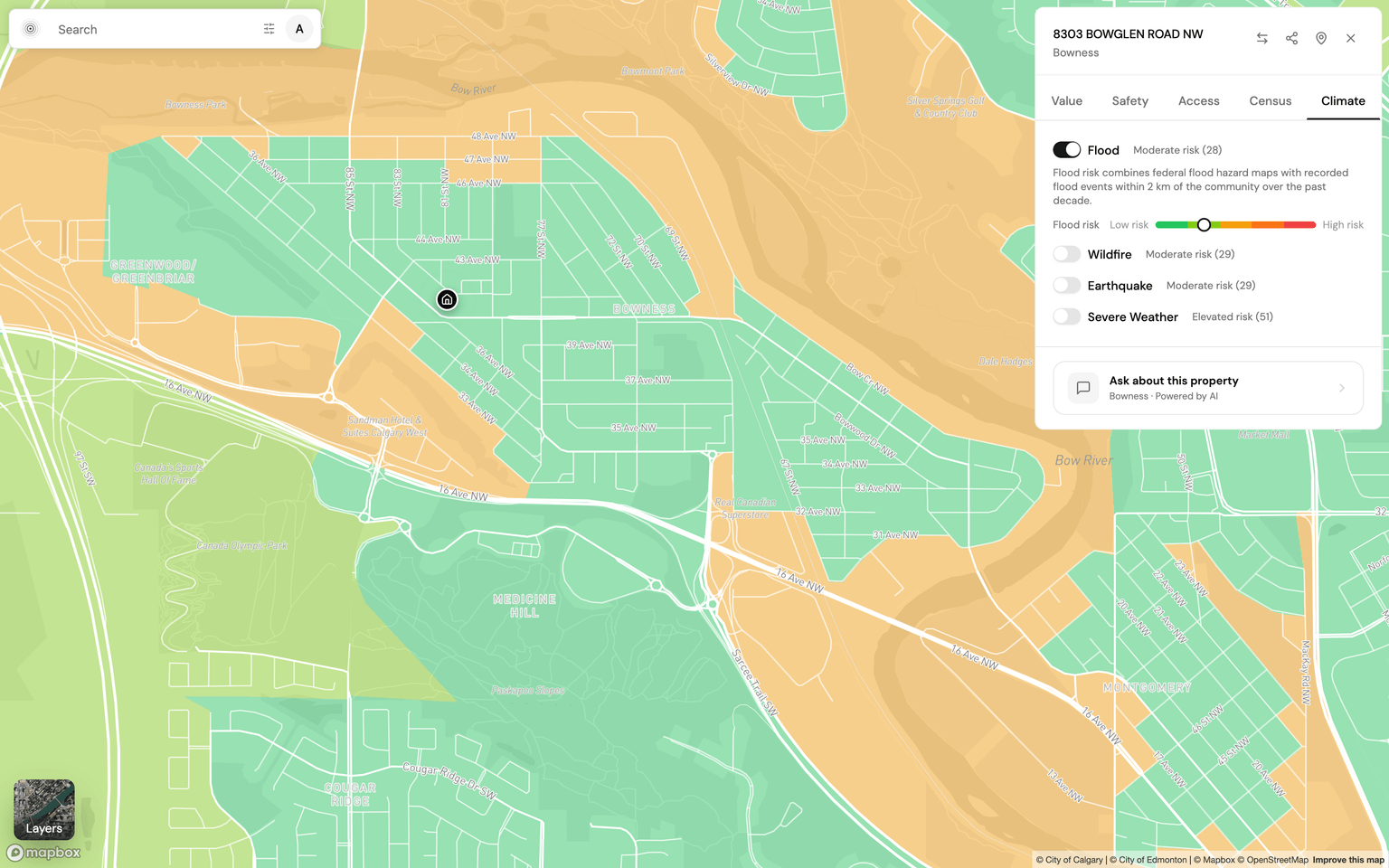
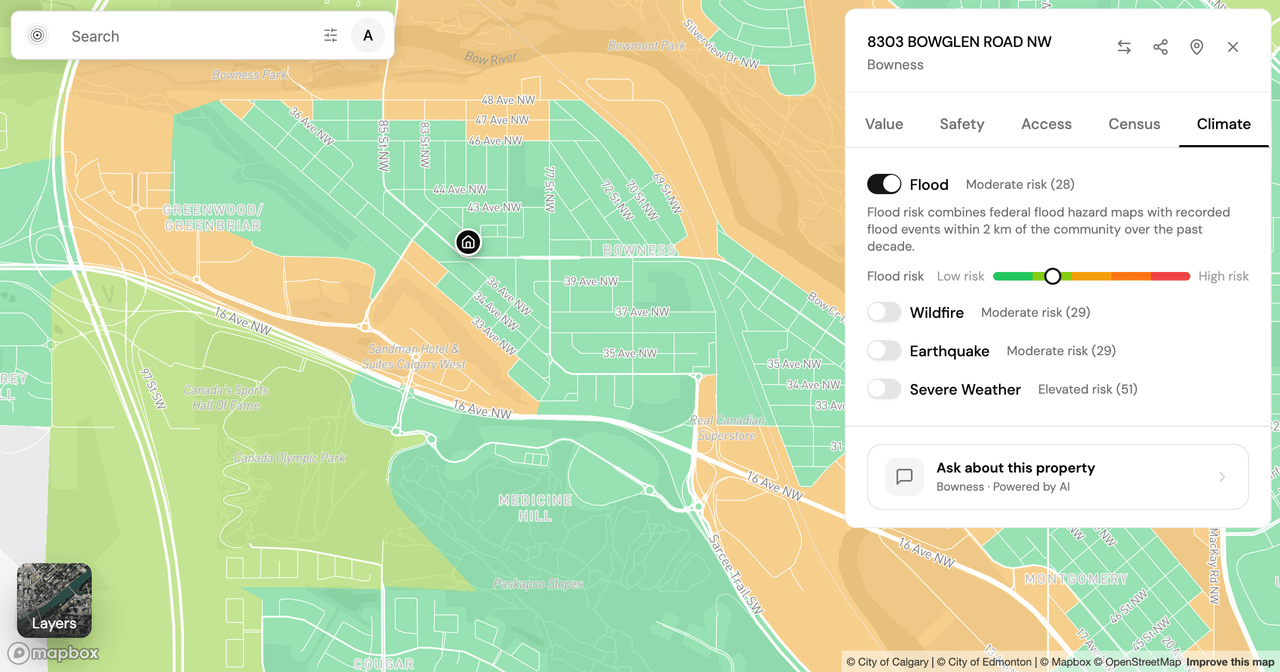
Open the Safety lens on the Explore map and Bowness sits at the 41st percentile for safety citywide. That is not a verdict, it is a prompt to look closer. The same map layers Calgary's flood zones on top, drawn from the more than 5,900 flood-zone areas mapped across the city, so you can see at a glance whether that specific block falls inside a 1-in-100-year line or sits well clear of it. Explore is public, so you can do all of this without an account.
The two-minute verdict
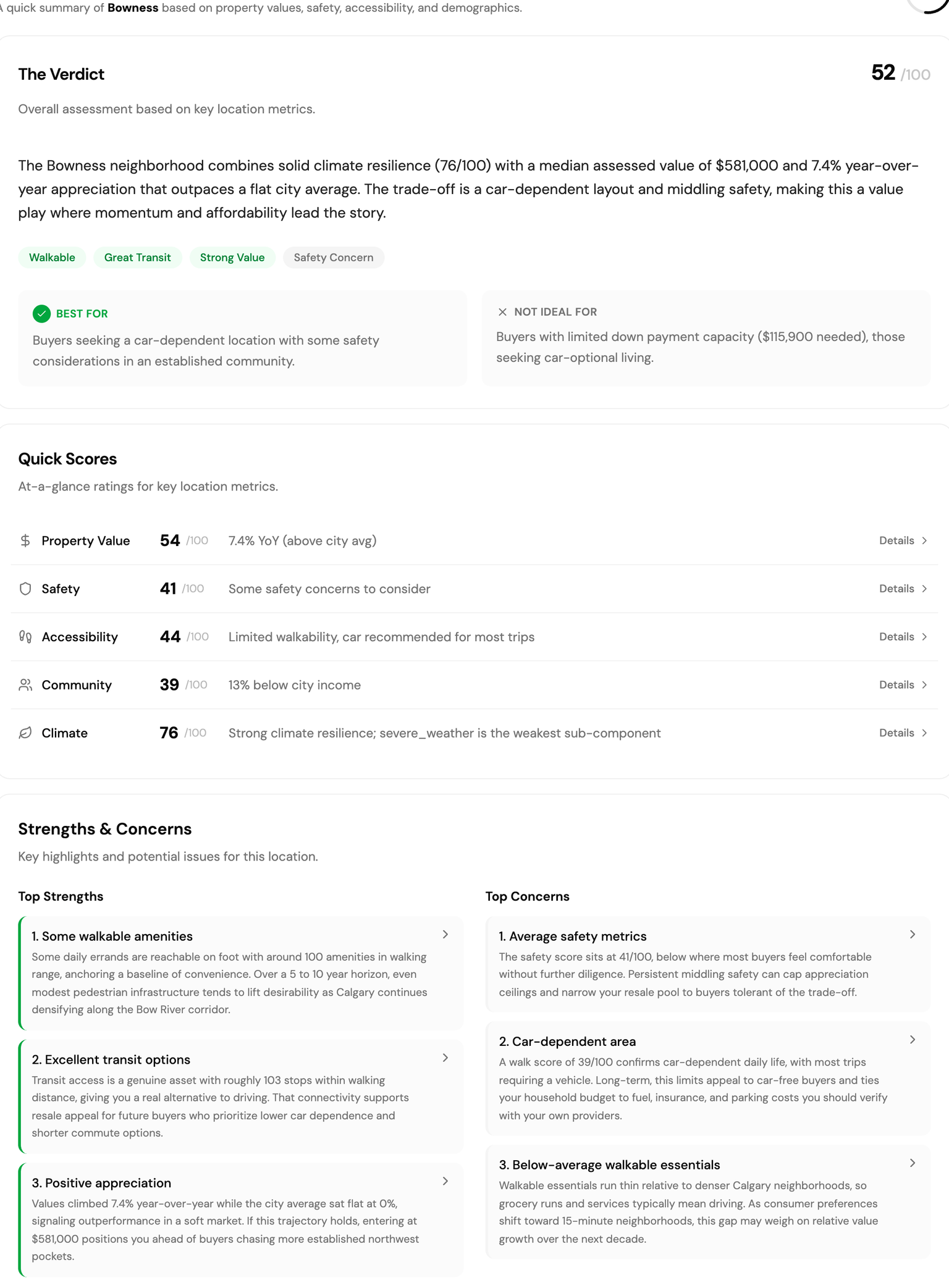
Want more than the map? A full Analyze report opens with a TL;DR: a plain-language verdict, quick scores for the things that matter to your situation, and the top strengths and concerns called out up front. For our Bowness bungalow, the report would surface what the listing photos leave out. Strong value growth, for one: assessed values here are up 52.9% over the past five years. But also a safety trend worth a second look. Reported crime in Bowness climbed 28.4% year over year in 2025, to 30.1 incidents per 1,000 residents, driven mostly by theft from vehicles. No 40-page PDF. No jargon. Just the headline, with the data behind it.
The detail that changes your mind
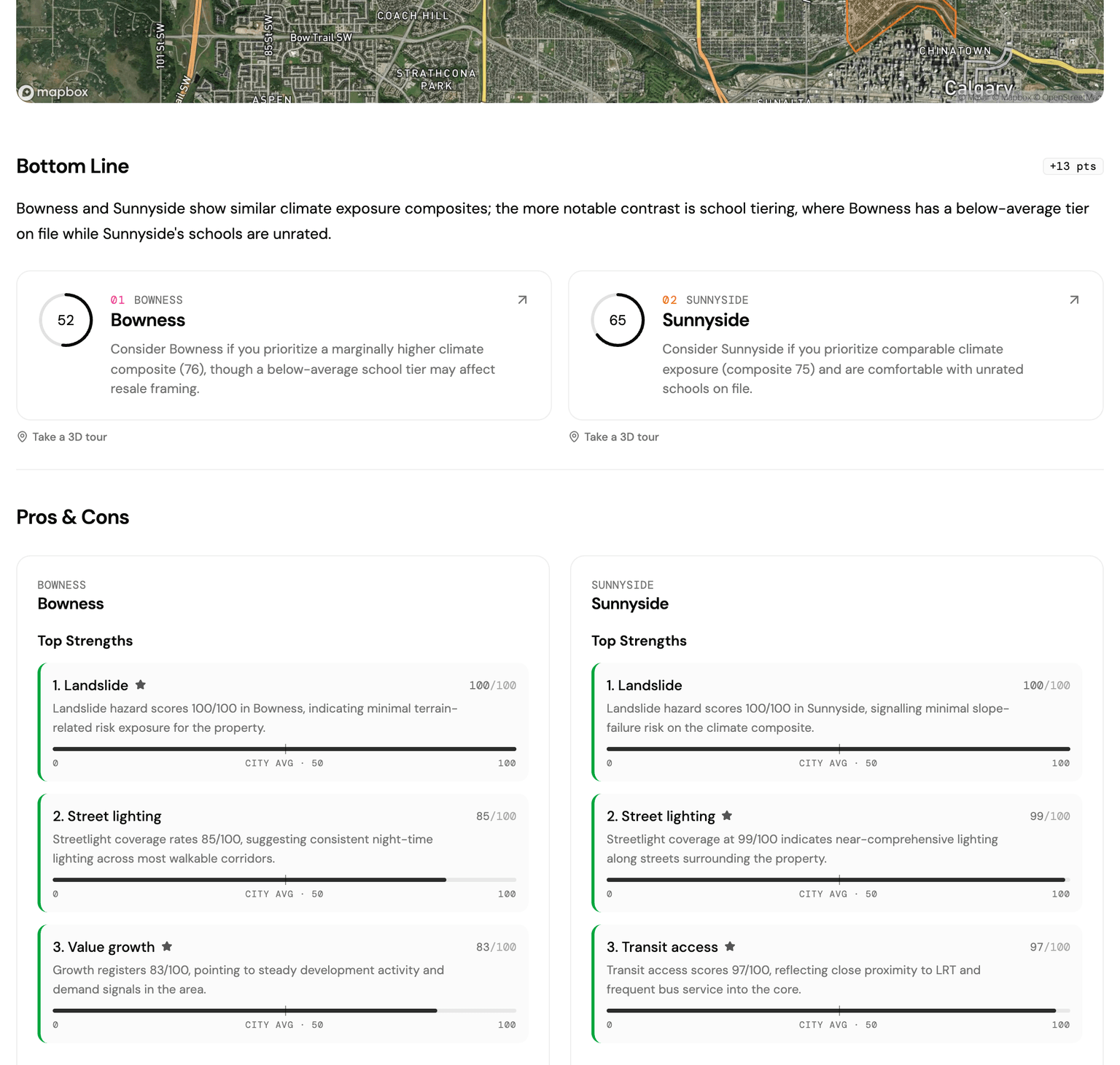
And when something catches your eye, you can go deeper. Compare that Bowness home with a condo in Sunnyside, another riverside community that flooded in 2013, and the picture shifts. Sunnyside's reported crime fell 26.4% last year, and it scores in the 91st percentile for walkability, with 14 grocery options inside a 15-minute walk against 6 in Bowness. Neither community is "better." If you prioritize a detached house and a yard, the data points one way. If you prioritize walking to everything and a falling crime trend, it points the other. The Compare tool puts them side by side so the trade-off is yours to make, not the listing photos'.
A score is a door, not an answer. The point is not to replace seeing a home in person. It is to make sure the visit is worth your Saturday.
The bottom line
You should not have to be a detective to buy a home. You should not have to fall for a place before you learn what is wrong with it. And you certainly should not have better real-time transparency on a pizza delivery than on the biggest purchase of your life.
The information gap in home buying is not a conspiracy. It is a pile of disconnected public data that no one ever bothered to assemble for the people who need it most. That is a fixable problem. The more buyers expect the red flags up front, and the more agents bring them to the table, the faster "sell the sizzle" gives way to "show me the data."
Stop losing Saturdays. Do the research before you drive.
Explore any Calgary address free on PickYourPlace, no account needed, and see what you would normally find only in the disclosure documents. When you are ready to go deeper, a free 7-day trial (no credit card, email only) unlocks full reports. You can also read how we track crime, lighting, and flood risk across the city, or see Calgary's safest neighbourhoods, ranked by the data.
Keep reading
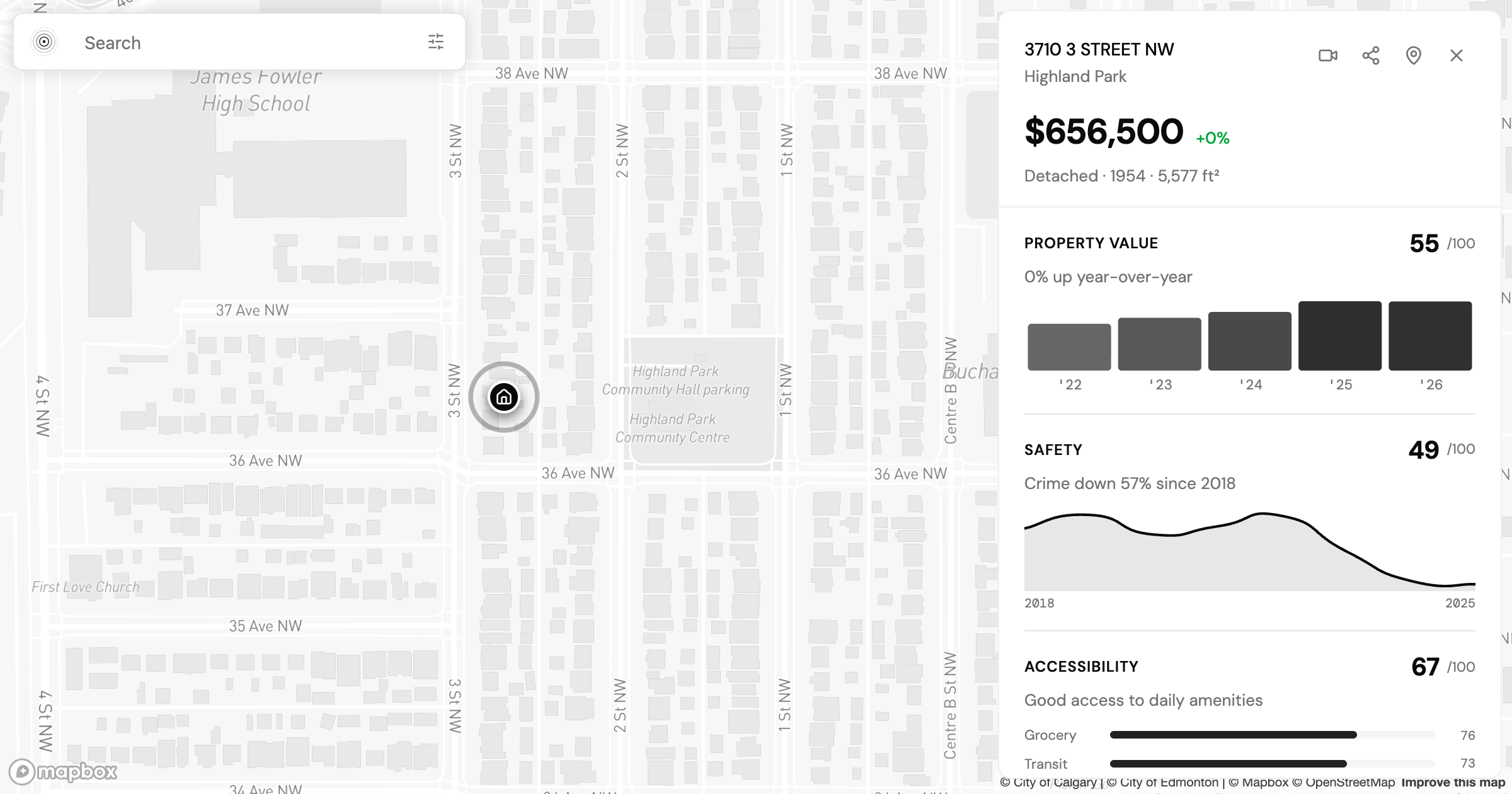
Is Highland Park Calgary Safe? Reading the Inner-North Crime Data
Is Highland Park Calgary safe? We pulled the Calgary Police crime data for this inner-north community and read a safety score of 49 category by category.
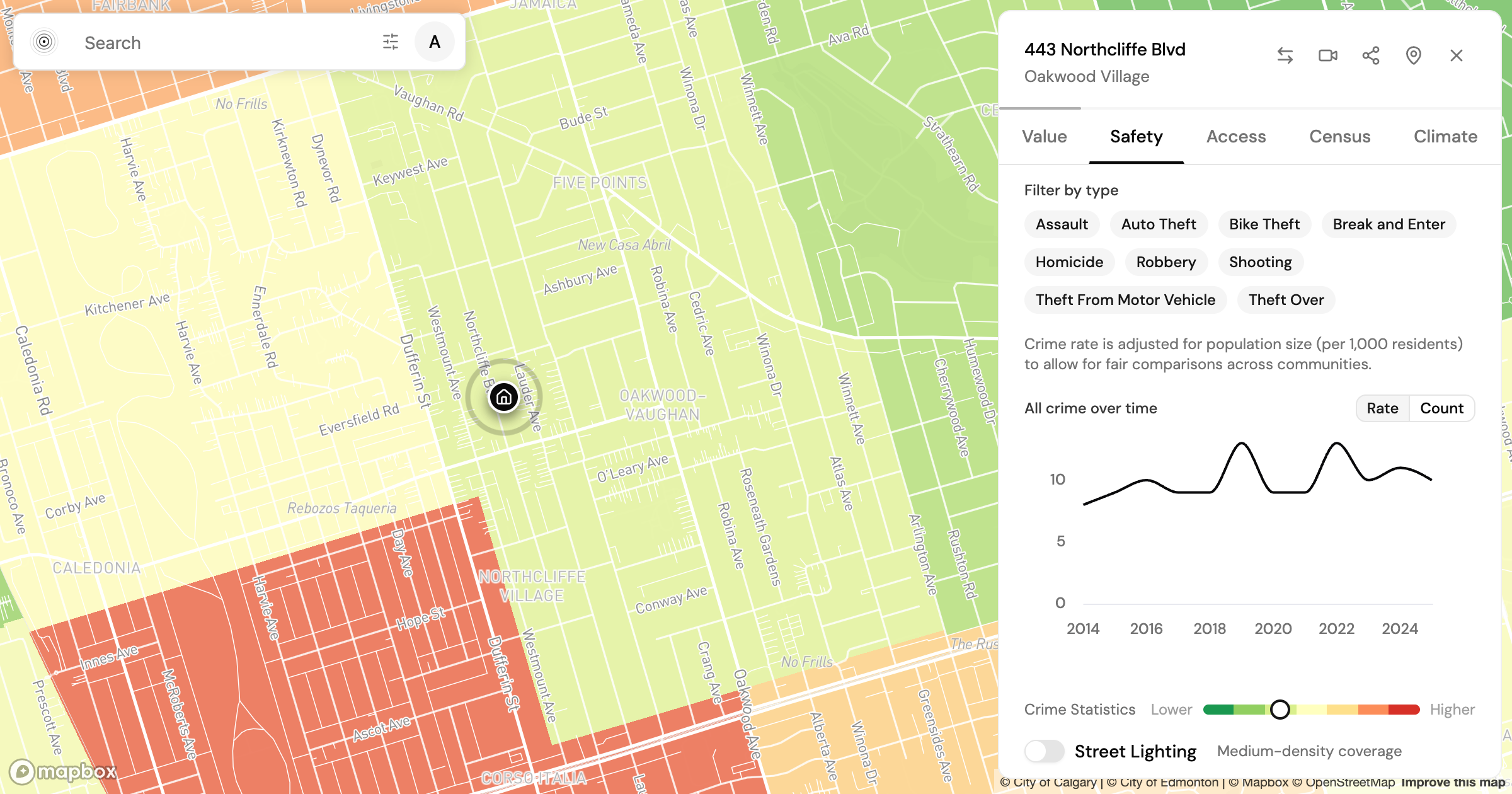
Is Oakwood Village Toronto Safe? What the Crime Data Shows
Is Oakwood Village Toronto safe? We read the Toronto Police crime data by category and trend to show how to turn a safety score into a question you can act on.
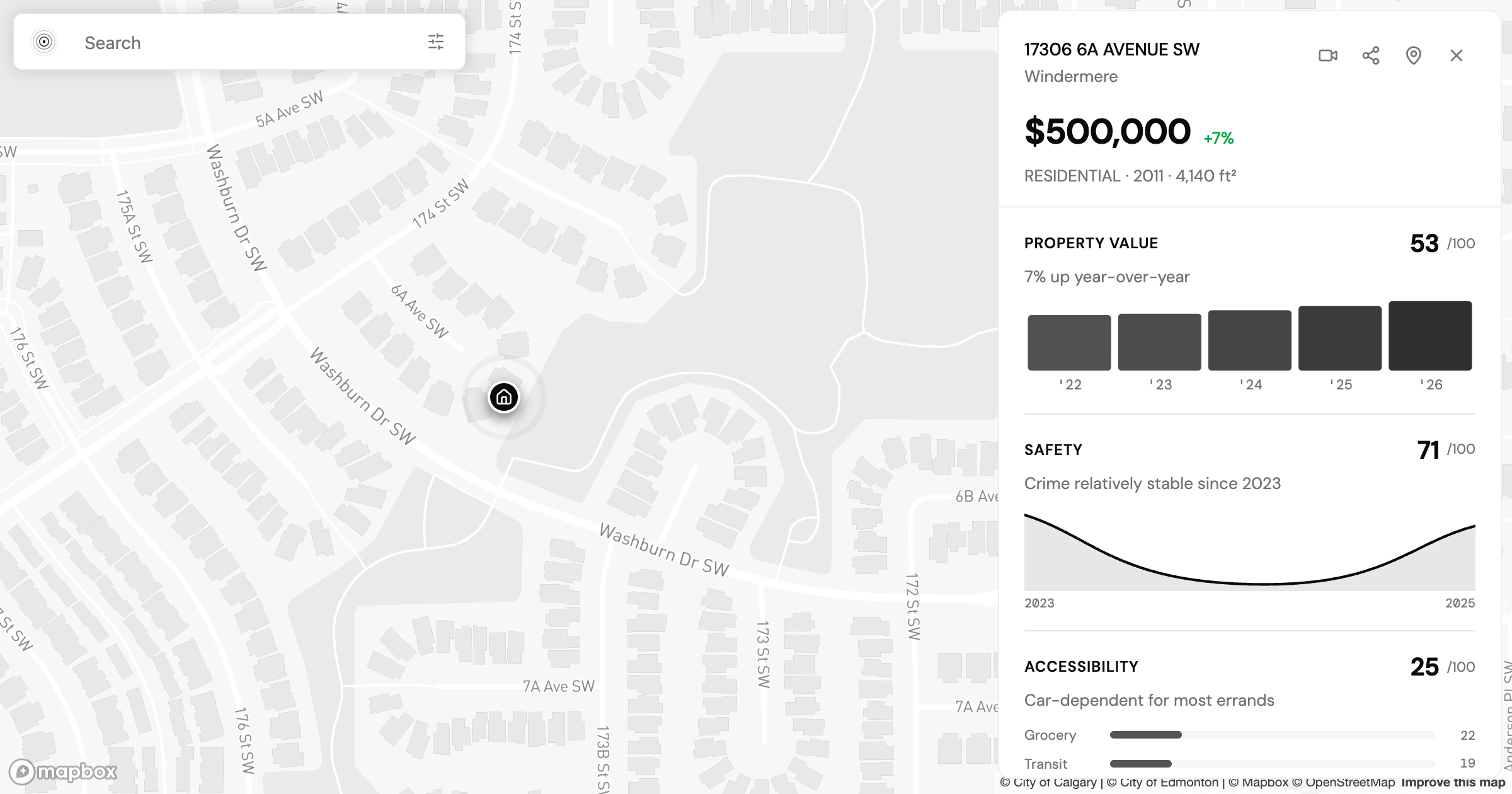
Allendale vs Windermere: Two Edmonton Neighbourhoods, Side by Side
Allendale vs Windermere in Edmonton: two communities at nearly the same assessed value that split on transit, safety, and who lives there. What the data shows.
Evaluate a place
Look up the neighbourhood around a listing before the showing: value trend, safety, access, community context and climate exposure.
Evaluate a place