Moving to Edmonton? Start With the Question, Not the Map
Moving to a city you do not know yet is a strange kind of research problem. You are about to make one of the biggest financial decisions of your life without the thing locals take for granted: a mental map of which neighbourhoods fit which lives. So you open a map, and the map does not help. It shows you streets and property values, but it cannot tell you what you actually want to know, which is whether a place is right for someone like you.
I have watched newcomers to Edmonton hit this wall over and over. They arrive with a plain question in their head, something like "is this neighbourhood a good fit if I don't own a car?" and no idea that the answer is scattered across four or five different kinds of data. That is the wrong place to start. In this post, I want to show you a better one: ask the question in normal words first, let the data sort itself out, and only then open the map. I will walk through how our neighbourhood advisor, Ask, routes a plain-language question across Edmonton's data, how you go deeper on a shortlist, what Edmonton coverage looks like today, and the two things Ask will deliberately not do for you.
The newcomer's real problem: you don't know which lens you need yet
Here is the trap. To evaluate an Edmonton neighbourhood well, you need to look at it through several lenses at once. Property values tell you one thing. Crime and safety data tell you another. Walkability and transit access tell you a third. Census figures, the age mix, household income, whether people rent or own, tell you a fourth. A newcomer does not know that. They have a single question and no map of which data answers it, so they bounce between a map, a pricing page, and a Reddit thread, collect a few contradictory opinions, and either give up or guess.
The cost of guessing on a place to live is high, and the whole point of having data is to lower it. The fix is not to make you learn the product first. It is to meet you at the question.
How Ask routes a plain-language question across lenses
Ask is a chat interface, but the useful part is what happens behind it. When you type a normal-language question about an Edmonton neighbourhood, Ask reads the intent and calls the specific data tools that answer it, then queries live Edmonton data through the same pipelines that power our Explore map. If you ask about getting around without a car, it pulls the accessibility and transit figures. If you ask whether a place feels established or transient, it pulls the census tenure and age data. You never have to know which lens you needed; the routing is the job.
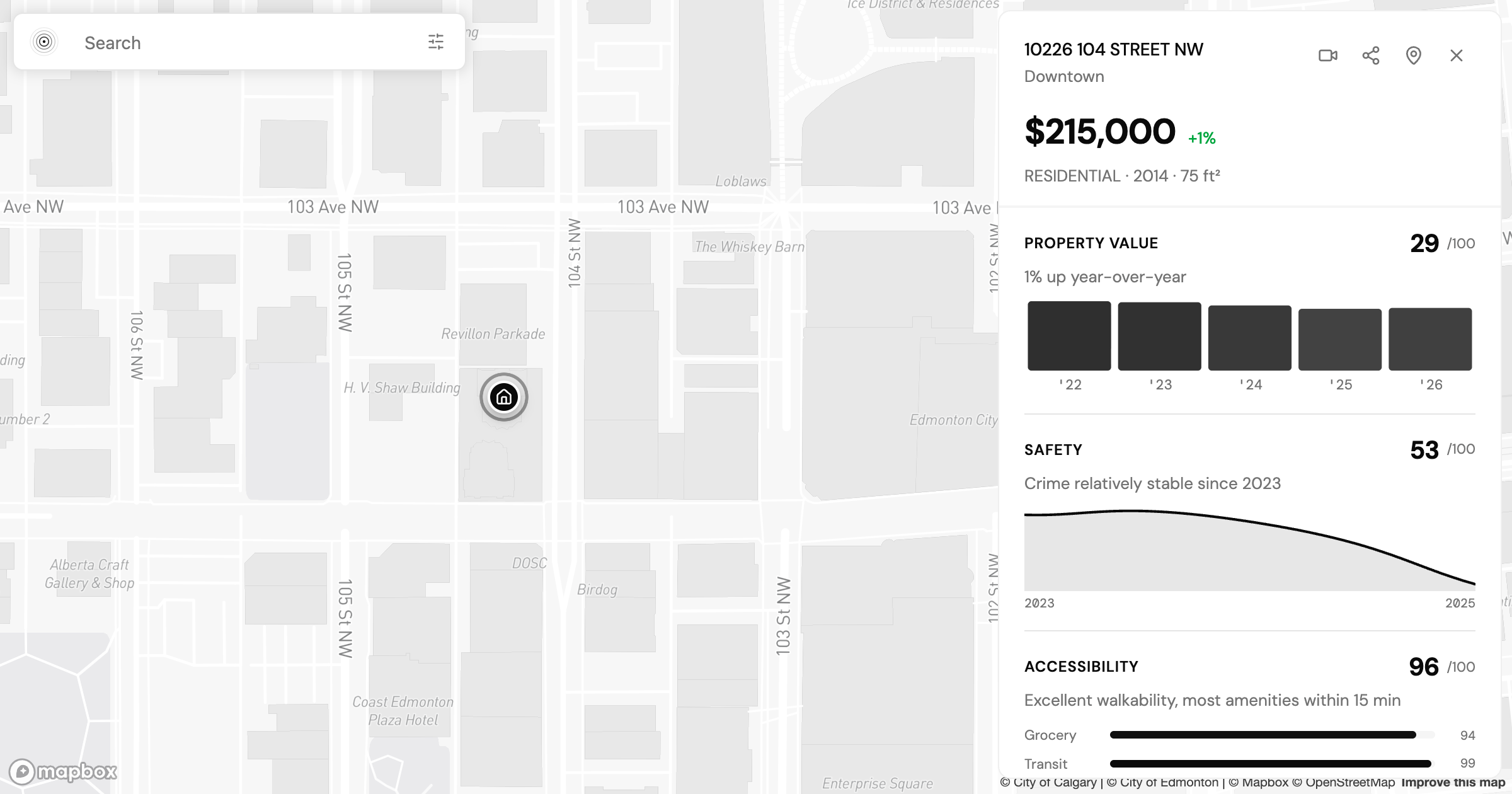
A worked example makes this concrete. Say you are new to Edmonton, you will not have a car for the first while, and you ask about central neighbourhoods with good transit. Ask can surface communities like Wîhkwêntôwin (formerly Oliver), home to about 17,000 residents, which sits in the 59th percentile citywide for transit access, or Downtown, which sits in the 99th percentile. Those percentiles are measured across Edmonton, where higher means stronger on that lens. They are doors, not verdicts: a starting point that tells you where to look harder, not a grade that ends the conversation. If you prioritize a short transit commute, the data points one way. If household fit or quieter streets matter more to you, it points somewhere else, and Ask will show you that too.
From an answer to a full report
A chat answer is meant to orient you, not to be the last word. Once Ask has narrowed things to a neighbourhood or two you actually care about, the natural next step is to go deeper. That is what the report is for: it takes a shortlisted Edmonton neighbourhood and lays out the full picture across every lens, with the assessment, safety, accessibility, and census data in one place instead of scattered across a conversation.
The path is deliberately low-commitment at the top. You start broad with a question, you narrow to a shortlist, and only then do you spend attention on a detailed report for the places that survived the first cut. Screening this way is faster than reading a full report for every neighbourhood that catches your eye.
Edmonton is live: what is covered today
None of this is a promise about a future release. Edmonton has been a shipped city on PickYourPlace since we launched it earlier this year, and Ask works over the same live data.
Coverage today spans 390+ Edmonton neighbourhoods and more than 430,000 property records, scored across five lenses:
- Value: assessed property values and how they have moved over time.
- Safety: crime incidents and related safety signals from Edmonton Police Service data.
- Accessibility: walking and transit reach to grocery stores, schools, parks, and stations.
- Census: population density, household income, age distribution, and housing tenure from Statistics Canada.
- Climate: flood, wildfire, and other hazard scoring.
The sources are City of Edmonton open data, Edmonton Police Service, Statistics Canada, and our own routing engine for the accessibility figures. You do not need a credit card to use any of it: the free 7-day trial opens up Ask and full reports immediately, and you can decide later whether a paid plan is worth it once you are actively comparing places.
What Ask will not do for you
Two limits are worth stating plainly, because they are the point rather than a shortcoming.
First, Ask will not invent details about you. It does not guess your income, your family situation, or what you can afford, and it will not quietly assume them to give you a tidier answer. If a recommendation depends on something it does not know, it asks, or it hands you the data and lets you weigh it against your own situation.
Second, Ask will not crown a single neighbourhood. There is no "best neighbourhood in Edmonton" waiting at the end of the conversation, because the honest answer always depends on what you are optimizing for. A place that ranks near the top for transit may sit mid-pack on household fit. Ask frames every score as a door and stays on the side of decision support: here is what the data shows, here is what it does not capture, and the call is yours.
That is the whole idea of starting with the question instead of the map. The map is where you finish, once you know what you are looking for; the question is where you should begin. If you are new to Edmonton and staring at a wall of neighbourhoods you have never heard of, open Ask, type the thing you actually want to know, and let the data meet you there. I would love to hear how it goes, so if a question comes back with an answer that surprised you, or one that missed, tell me. That feedback is how the advisor gets sharper.
Keep reading
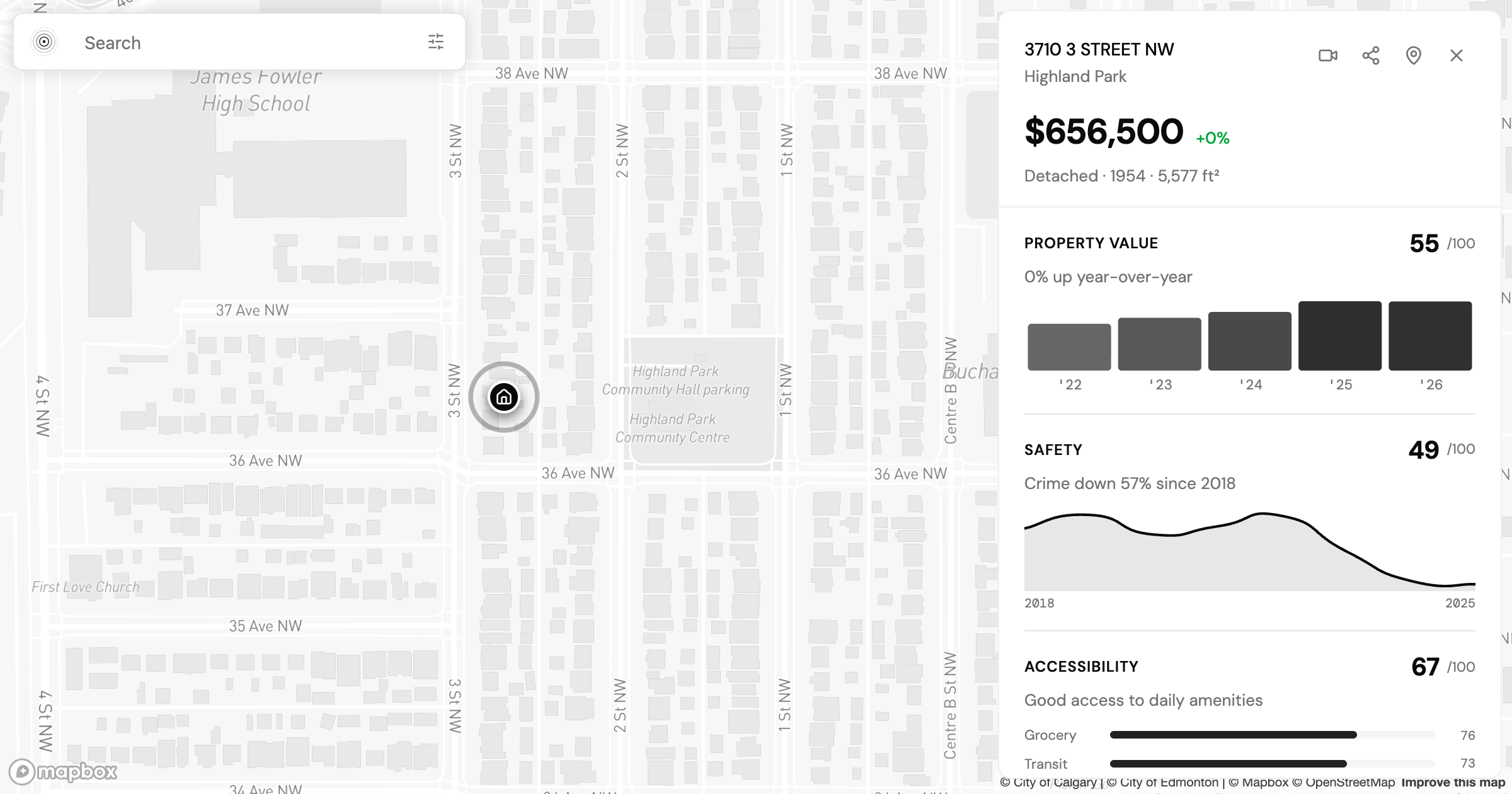
Is Highland Park Calgary Safe? Reading the Inner-North Crime Data
Is Highland Park Calgary safe? We pulled the Calgary Police crime data for this inner-north community and read a safety score of 49 category by category.
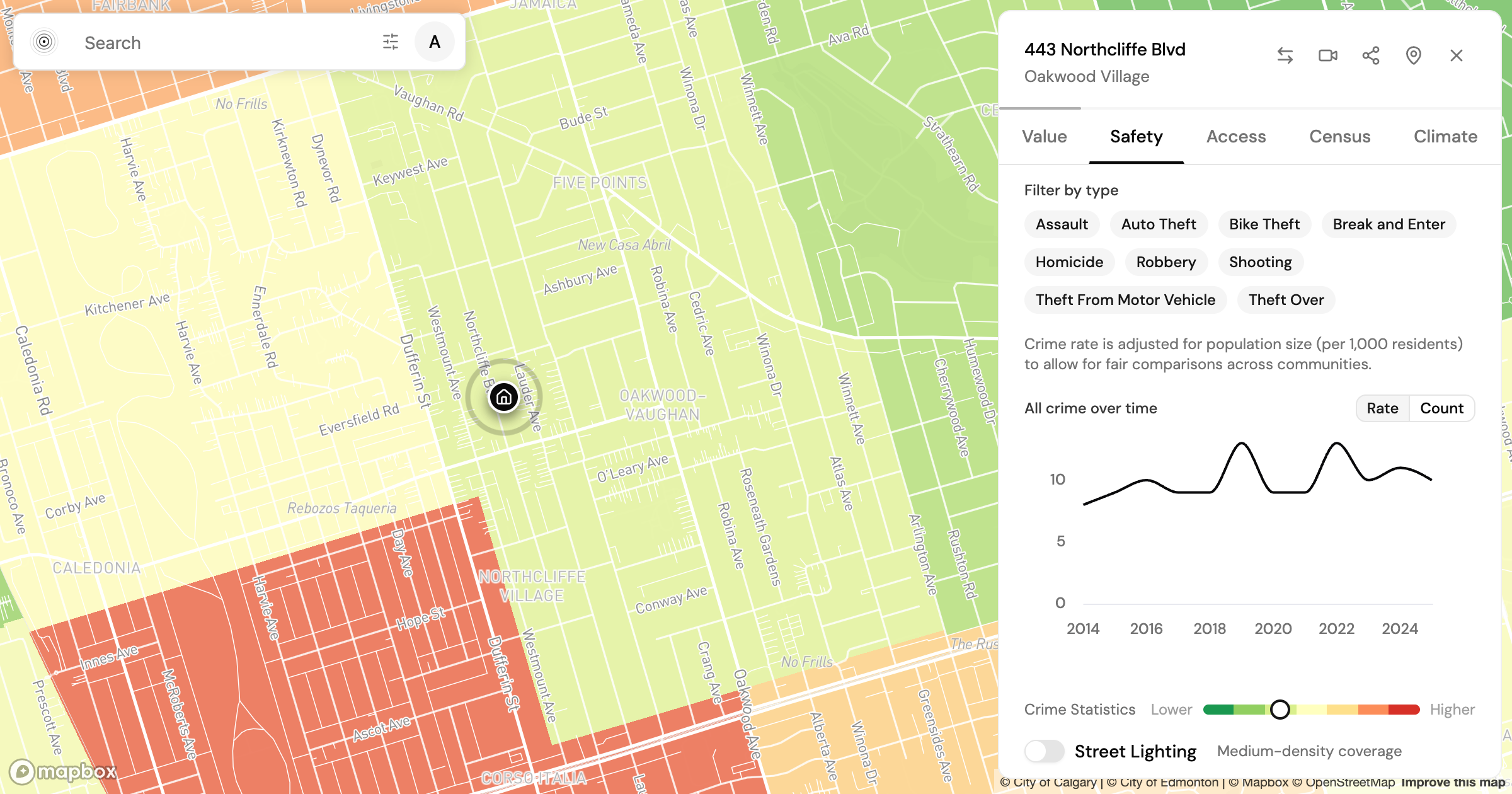
Is Oakwood Village Toronto Safe? What the Crime Data Shows
Is Oakwood Village Toronto safe? We read the Toronto Police crime data by category and trend to show how to turn a safety score into a question you can act on.
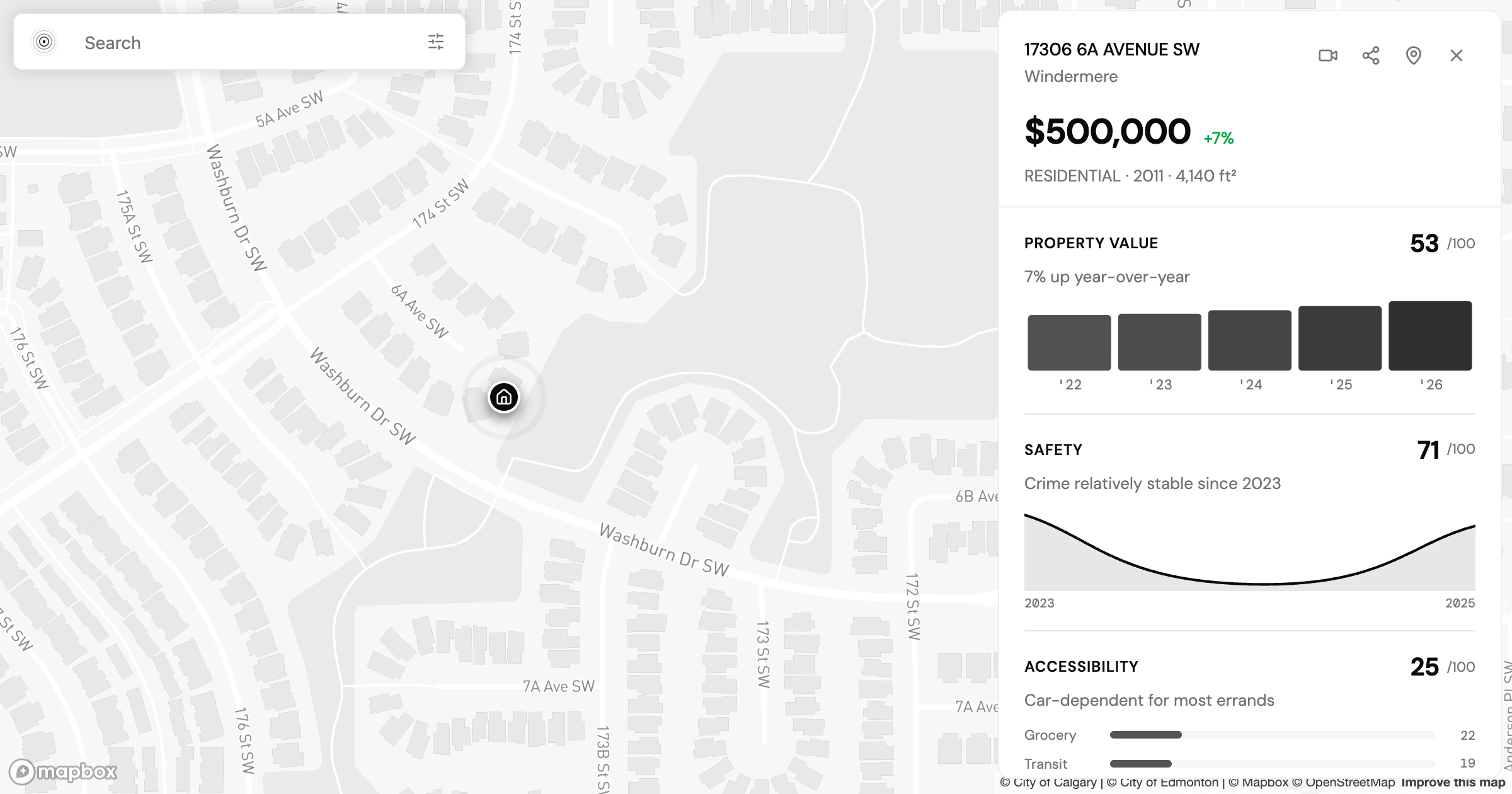
Allendale vs Windermere: Two Edmonton Neighbourhoods, Side by Side
Allendale vs Windermere in Edmonton: two communities at nearly the same assessed value that split on transit, safety, and who lives there. What the data shows.
Start my move
Tell us about the move and we will narrow the city down to places that fit, with the reasons and the trade-offs. No account needed.
Start my move