Ontario to Alberta Property Values: Calgary vs Edmonton
A buyer messaged me last month with a question I did not have a clean answer for. They had already decided to leave the Greater Toronto Area for Alberta (the math on housing costs made that part easy) but they were stuck one level down: Calgary or Edmonton? The budget was the same either way. The two cities sit three hours apart on Highway 2, and the forum threads they had been reading pointed in both directions at once.
If you are planning a move from Ontario to Alberta, property values are usually the first thing you compare, and the first surprise is how far a GTA budget stretches in either city. The harder question is what that budget actually buys once you are choosing between the two. In this post, I compare two similarly priced inner-city communities (Tuxedo Park in Calgary and Glenora in Edmonton) across assessed value, five-year growth, transit access, and everyday walkability, using figures pulled from our production database in July 2026. The goal is not to crown a winner. It is to show what the same roughly $640,000 buys in each city, so you can decide which trade-offs you would rather live with.
What a GTA budget looks like in Alberta
Start with the baseline, because it reframes everything that follows. Assessed value is the value a municipal assessor assigns to a property for tax purposes; it tracks market value closely enough to compare communities against each other, though by design it lags a live sale price. A cross-city price anchor needs one consistent source, so for that comparison I use Statistics Canada's 2021 Census median dwelling value rather than any municipal assessment roll. On that measure, Toronto's Junction Area sits at about $1.12 million, against roughly $537,000 for Tuxedo Park and $632,000 for Glenora. The Alberta assessment-roll figures later in this post are a different measure, so read them as within-city numbers rather than a like-for-like comparison against Toronto.
We cover the full Ontario-to-Alberta picture (income tax, sales tax, and housing) in our complete relocation guide. The short version is that the province-level savings are real and well documented. What that guide does not do is help you choose between Calgary and Edmonton once you are already sold on Alberta. That is the gap this post fills.
The clearest way to fill it is to hold price roughly constant and look at what changes underneath. So rather than compare the two cities in the abstract, I picked one established inner-city community in each that lands at almost exactly the same median assessed value, then read them against the lenses we score every community on: property value, safety, accessibility, and census demographics, alongside climate. When the price tag is the same, the data underneath it is where the real decision lives.
Calgary's Tuxedo Park: $649,000 and a strong transit profile
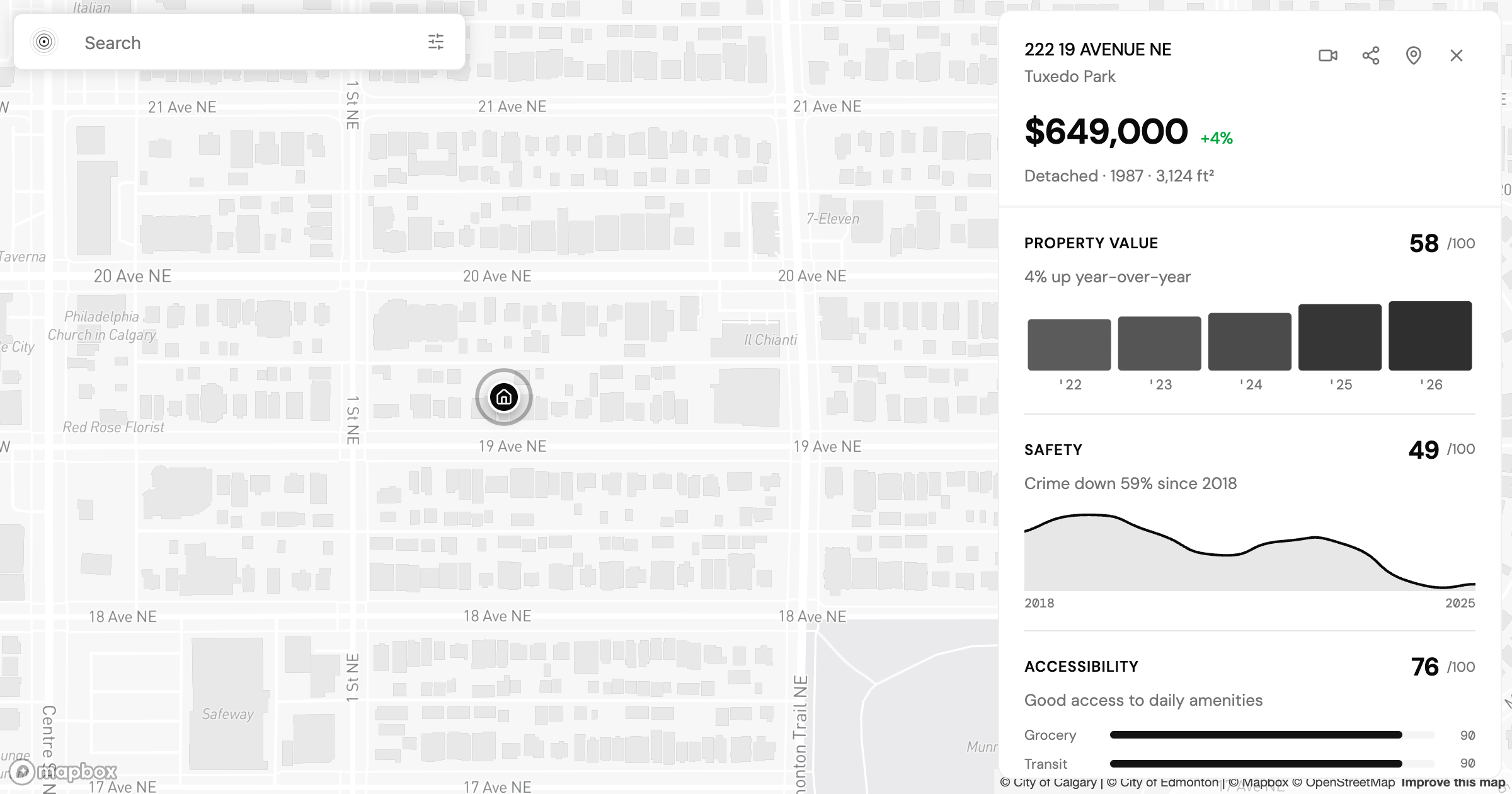
Tuxedo Park sits just north of Calgary's downtown, an established inner-city community along the numbered avenues. On the 2026 assessment roll its median assessed value is $649,000, up 38.2% over five years and 2.0% year over year.
Its standout number is transit. Tuxedo Park ranks in the 90th percentile citywide for transit access. A percentile is simply its rank against every other Calgary community, where 90 means only about one in ten communities scores higher. That reflects its position along the Centre Street bus rapid transit spine and its short distance to downtown. Its accessibility score for everyday walking access is 76 out of 100, with 11 grocery and food options reachable within a 15-minute walk. A 15-minute walk is the distance an average adult covers on foot in a quarter hour, roughly one kilometre, and it is the radius we use to test whether daily errands are car-optional. Eleven options inside that radius describe a walkable weekday: you can pick up groceries, coffee, or dinner without starting the car.
Safety sits mid-pack. Tuxedo Park's composite safety score is 49 out of 100, close to the Calgary median score of about 48. That composite blends reported crime with factors like street lighting and distance to the nearest fire, police, and health services, and like any crime-based measure it captures reported incidents rather than the full picture. The full breakdown is on its property value page.
Edmonton's Glenora: $632,500 at a near-identical price
Glenora is one of Edmonton's older established neighbourhoods, west of the downtown core and close to the river valley. Its 2026 median assessed value is $632,500, within about $16,500 of Tuxedo Park, close enough that a buyer working to a single budget could pick either on price alone. From there the two communities diverge.
The growth trajectory is the first difference. Glenora's assessed value is up 4.7% over five years and 1.0% year over year, against Tuxedo Park's 38.2% and 2.0%. Five-year growth measures how much the median assessed value has moved since the 2021 roll; a higher figure means faster appreciation on paper, though past movement is not a forecast, and assessment growth is not the same thing as a realized resale gain.
The daily shape differs too. Glenora ranks in the 29th percentile citywide for transit access and scores 51 for everyday walking access, with 2 grocery and food options inside a 15-minute walk. That is a quieter, more residential rhythm: mature streets and river-valley proximity, with most errands assuming a vehicle. Two walkable food options versus Tuxedo Park's eleven is the concrete version of that difference: a car-first weekday rather than a car-optional one, which matters more to some households than any dollar figure. Its composite safety score is 57, and it carries the same reported-incident caveat as any crime-based measure. The full data is on its property value page.
Where the two communities pull apart
On price these two are near-twins. On everything else they ask you to weigh different things.
- Appreciation on paper. Tuxedo Park's 38.2% five-year assessed growth is roughly eight times Glenora's 4.7%. That gap says recent demand signals point in different directions. It does not say one is the better buy. Faster past growth can reflect a hotter market or a higher entry point, and neither predicts your resale.
- Mobility. Tuxedo Park's 90th-percentile transit and 11 walkable food options describe a car-optional weekday. Glenora's 29th-percentile transit and 2 walkable options describe a car-first one. Which reads as better depends entirely on how you commute and where you shop.
- Safety composite. Glenora edges ahead with a score of 57 against Tuxedo Park's 49. It is a real difference, but a modest one.
The framing that matters here is that percentiles are scored inside each city, so a 90th-percentile transit rank in Calgary and a 29th in Edmonton are ranks against local peers, not a direct head-to-head. If you prioritize walk-to-everything access, the Calgary community is the stronger fit. If you prioritize a quieter residential setting near the river valley and a lower entry into a slower-moving market, the Edmonton one is. The data supports that decision; it does not make it for you.
Running the two cities side by side yourself
Tuxedo Park and Glenora are one pairing out of hundreds, and the communities you are actually weighing are probably not these two. Compare builds a side-by-side decision-support document for two or three communities in a single view: the pros, cons, and trade-offs across all five lenses, laid out section by section, ending in a plain summary of what separates them. Because it accepts community reports from any of our regions, you can put a Calgary community and an Edmonton one in the same comparison. That cross-city view is the one thing a forum thread cannot give you.
Where to start
If you have not settled on either city yet, three tools take you from here:
- Describe your priorities. Tell the Neighbourhood Advisor your commute target, walkability floor, and budget ceiling, and it returns matching communities across both Calgary and Edmonton and can compare any two on request.
- Test a specific address. Drop an address into Analyze for a five-lens report (property value, safety, accessibility, census, and climate risk).
- See both cities together. A 7-day free trial, email only and no credit card, gives you full access to run community comparisons across both cities before you commit. Plan details are on the pricing page.
Before you sign anything, fly out and spend a weekend in your shortlist. Walk the blocks at different times of day, ride the bus you would actually take to work, and talk to a local agent who knows the streets. The numbers can tell you what the same budget buys in Calgary versus Edmonton, and which trade-offs come attached to each. They cannot tell you which city will feel like home. I would love to hear which cities you are weighing, so reach out if you have questions or want another pairing run.
Related reading
Keep reading
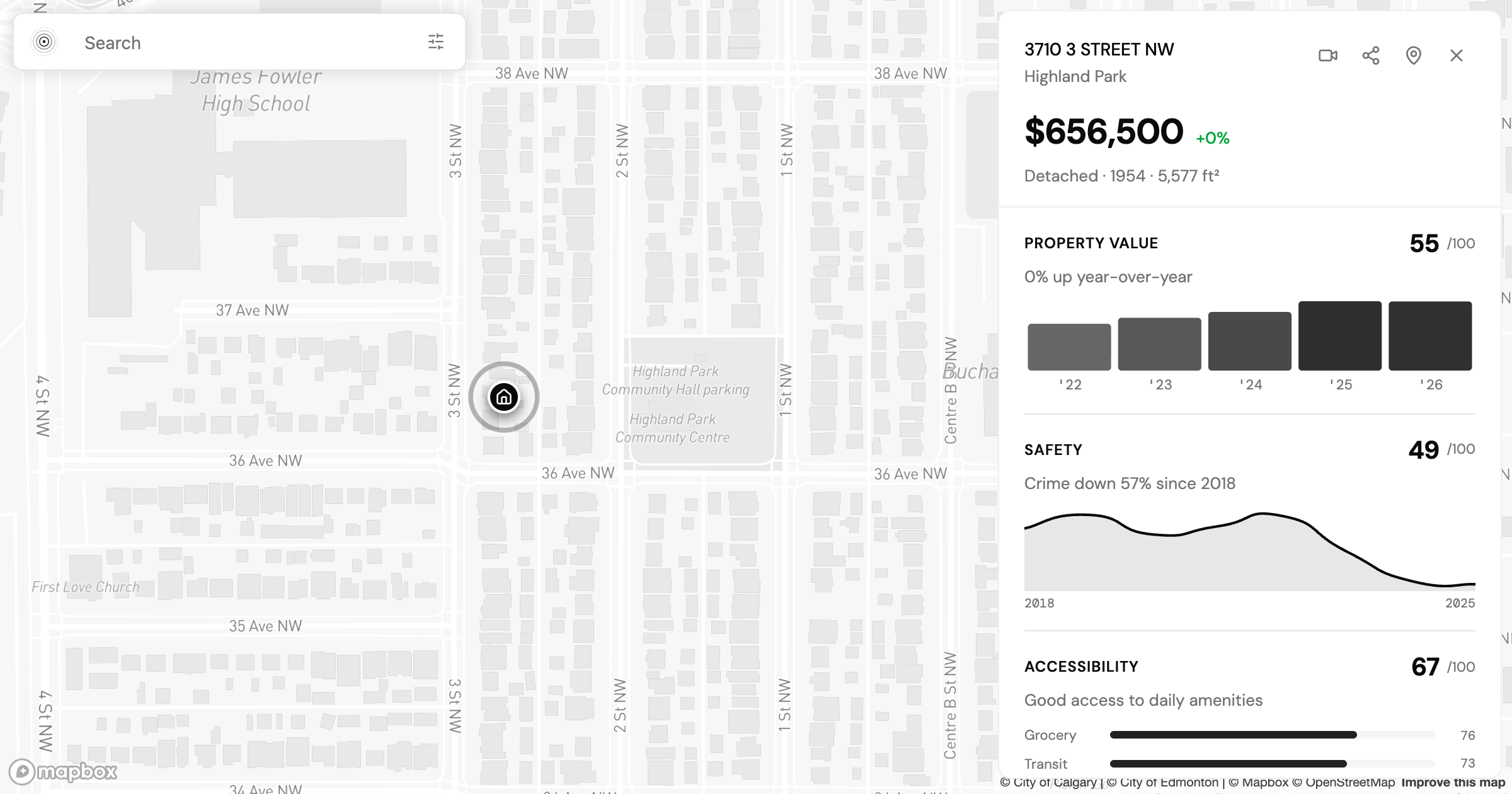
Is Highland Park Calgary Safe? Reading the Inner-North Crime Data
Is Highland Park Calgary safe? We pulled the Calgary Police crime data for this inner-north community and read a safety score of 49 category by category.
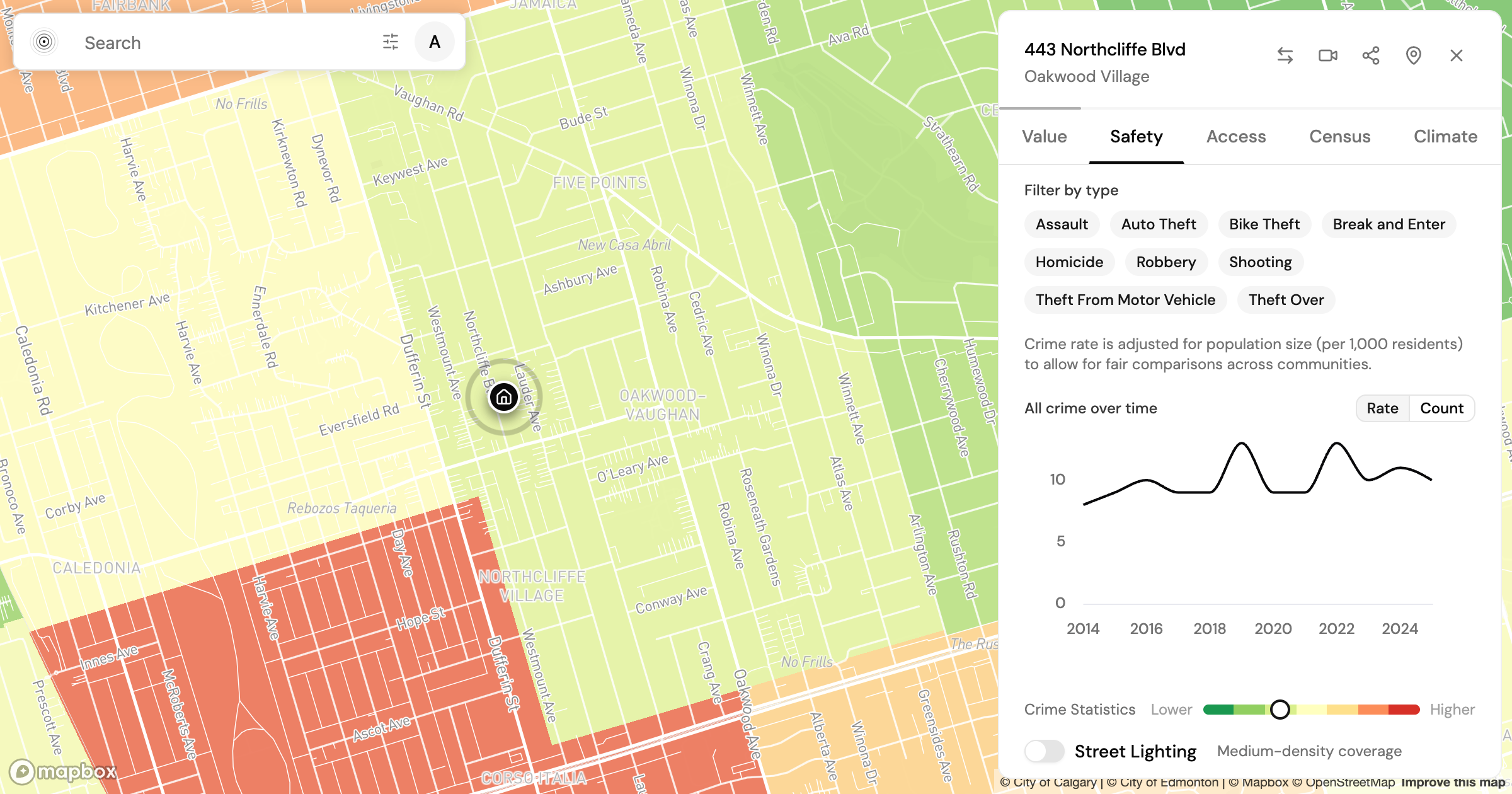
Is Oakwood Village Toronto Safe? What the Crime Data Shows
Is Oakwood Village Toronto safe? We read the Toronto Police crime data by category and trend to show how to turn a safety score into a question you can act on.
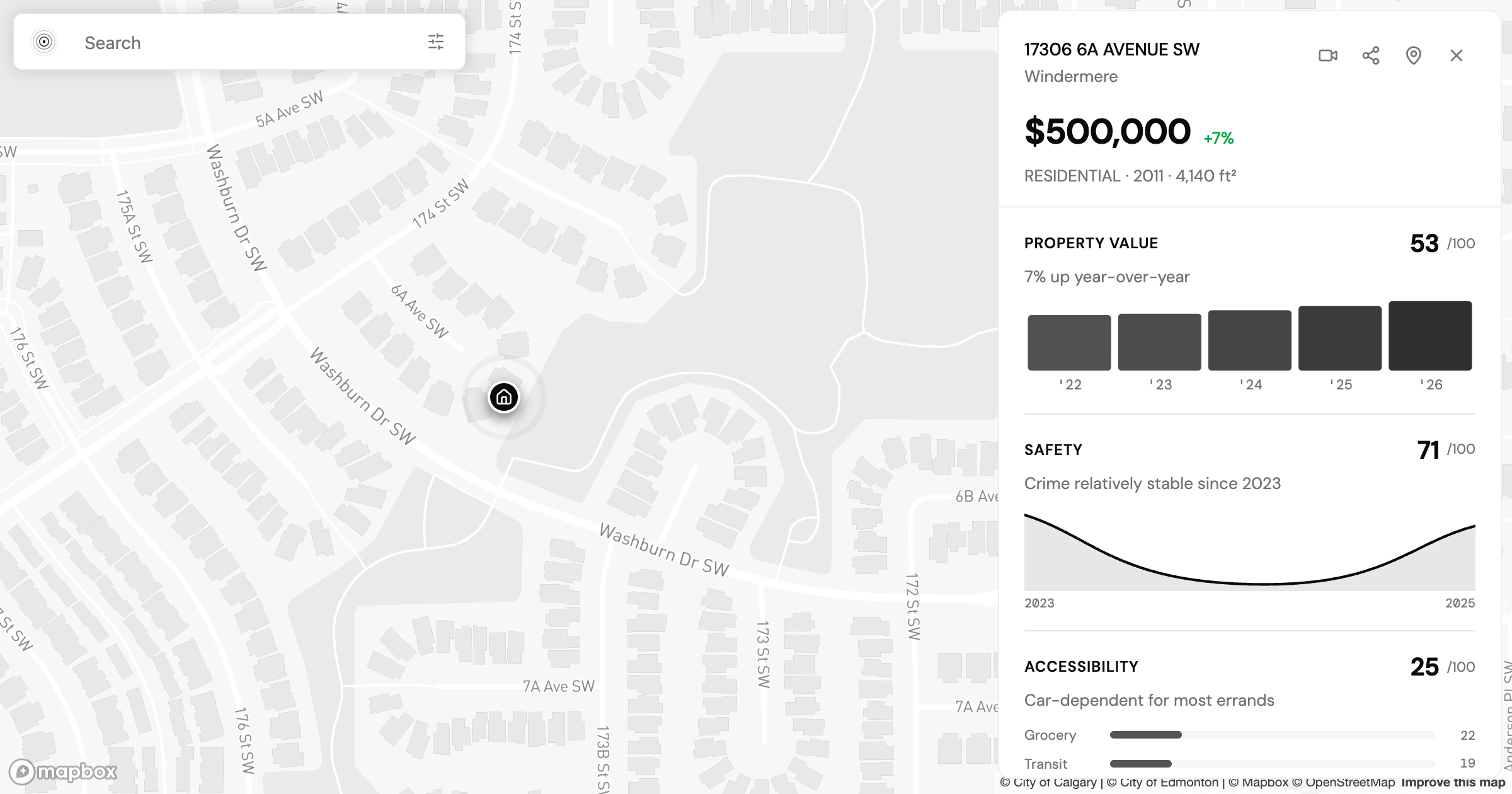
Allendale vs Windermere: Two Edmonton Neighbourhoods, Side by Side
Allendale vs Windermere in Edmonton: two communities at nearly the same assessed value that split on transit, safety, and who lives there. What the data shows.
Start my move
Tell us about the move and we will narrow the city down to places that fit, with the reasons and the trade-offs. No account needed.
Start my move